Cold Rooms
How to Keep a Room Warm Without a Heater: 11 Practical Ways That Actually Work

You don't always need a space heater to feel warmer. Blocking drafts, using passive solar heat, and adding thermal layers can raise a room temperature by 5-10 degrees for little or no cost.
Why I started looking for no-heater solutions
My first apartment had baseboard heaters that barely worked in the back bedroom. Running a space heater all night cost me about $60 extra per month, and I was always worried about fire safety. I started testing every no-heater method I could find: sealing drafts, adjusting curtains, changing how I used the rooms. Over a few weeks I found that combining five or six small changes made the room feel 7 degrees warmer without using any extra electricity.
Key takeaways
- Blocking drafts is more effective than adding heat.
- Passive solar heating is free if you use curtains at the right time.
- Layering bedding and clothing costs nothing and works immediately.
- Most no-heater fixes cost under $20 and are renter-safe.
Close curtains at dusk
Single-pane windows lose a shocking amount of heat at night. In my old apartment, I measured the temperature near the window dropping 6 degrees within an hour of sunset when the curtains were open. Thermal curtains with a tight seal around the window frame trap a layer of air between the fabric and the glass. Even regular curtains help if they are thick and cover the whole window.
Add a door draft stopper
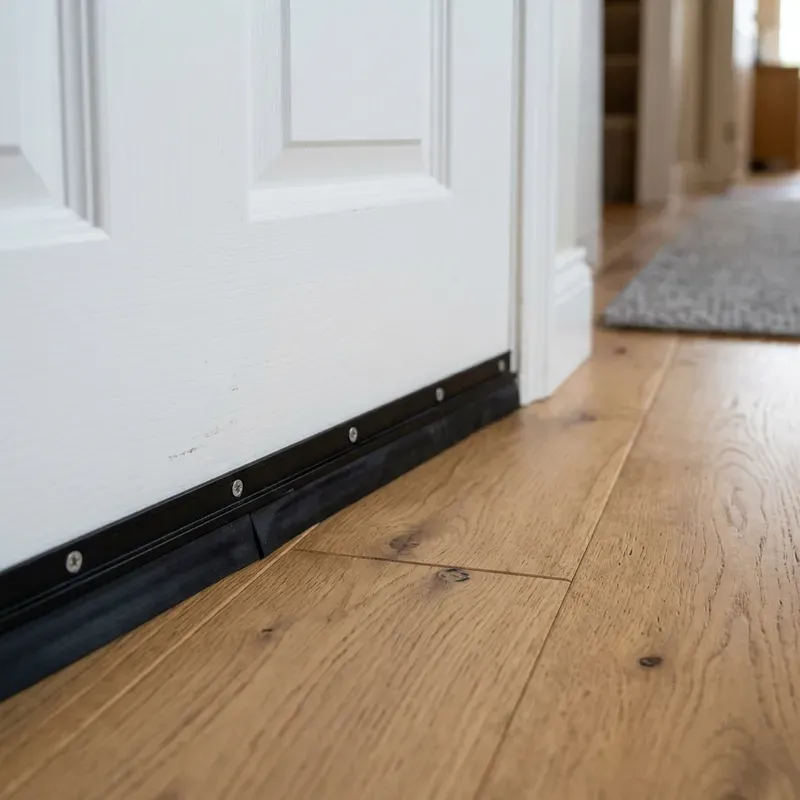
The gap under a typical interior door is about half an inch. When the rest of the house is warmer than your room, cold air from outside replaces the warm air that should be flowing in. A fabric draft stopper costs about $12 at any hardware store. I bought one for my bedroom door and the draft I used to feel at ankle level disappeared immediately.
Open curtains on sunny windows
South-facing windows can add 5-8 degrees to a room on a clear winter afternoon. I tested this in my living room on a 38-degree day: with the blinds closed the room stayed at 62 degrees. After two hours of direct sunlight through an uncovered window, it reached 69 degrees.
Use rugs on cold floors
Cold floors pull heat out of a room through your feet and through the air. I have a bedroom over a crawl space where the bare floor was 48 degrees in winter. Adding a thick wool rug with a separate rug pad brought the floor surface temperature to 58 degrees — a 10-degree improvement that I could feel immediately.
Seal window edges with rope caulk
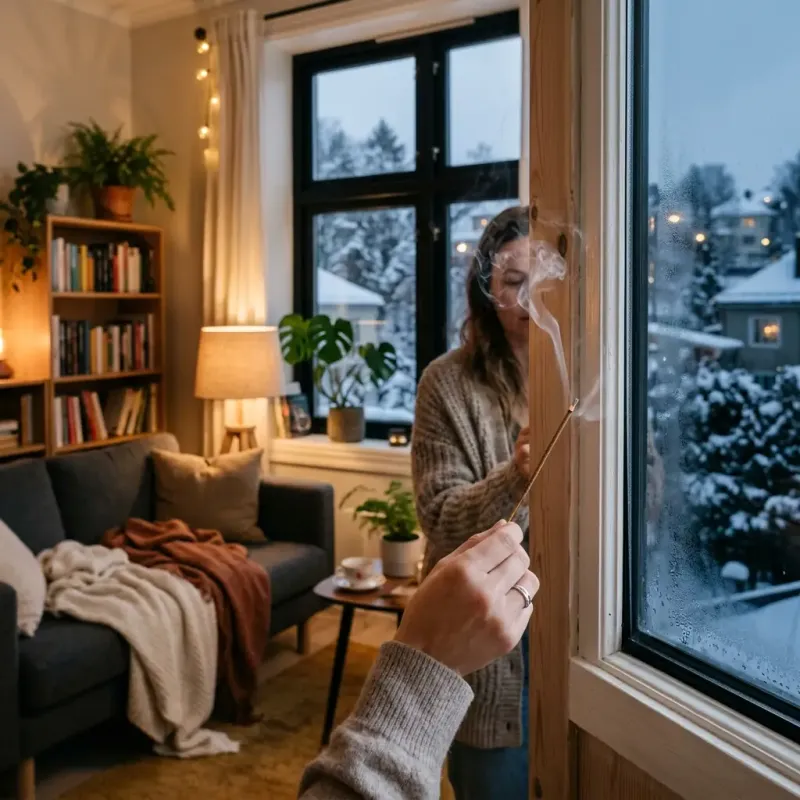
Rope caulk is a temporary sealant that presses into gaps around window sashes and frames. It costs about $4 per window and peels off without damaging the paint. I sealed three windows in my apartment in about 20 minutes and stopped drafts that I had not even noticed before. The incense test confirmed it: no more smoke drifting near the window frame.
Use ceiling fans in reverse
Most ceiling fans have a switch that reverses the blade direction. In winter, the fan should spin clockwise at low speed. This pulls cool air up from the floor and pushes warm air that has collected near the ceiling back down. I tested this in my bedroom and measured a 2-degree improvement at floor level after running the fan on low for 10 minutes.
Layer your bedding
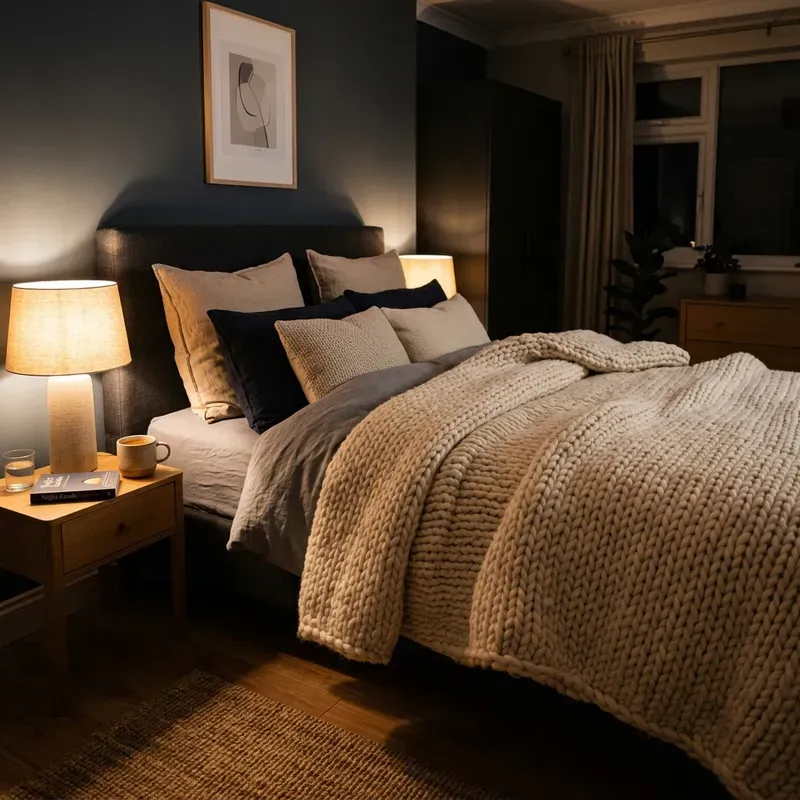
A single heavy comforter is less efficient than multiple layers. A lightweight duvet with a fleece blanket on top traps more body heat because the layers create small air pockets. I switched to this system and found I could sleep comfortably even when the room temperature dropped to 58 degrees.
Move furniture away from exterior walls
A bookshelf or bed pressed against an exterior wall acts as a cold sink, absorbing heat from the room and transferring it to the wall. Pulling furniture a few inches away from the wall allows air to circulate behind it. I moved my bed away from a drafty exterior wall and the area around the bed felt noticeably less cold.
Redirect heat from other rooms
If your HVAC system runs but the cold room stays cold, keep the bedroom door open during the day. This allows warm air from the rest of the house to circulate in. I leave my bedroom door open whenever I am home and close it only at night. The temperature difference between the room and the hallway dropped from 8 degrees to 3 degrees.
Use a towel on the windowsill
Even with sealed windows, cold glass creates a downdraft that makes the room feel colder. A rolled towel placed on the windowsill blocks this cold air before it reaches the room. I use a matching hand towel that blends with the curtain color. It is not a permanent fix but it helps on the coldest nights.
When to consider a space heater
If the room stays below 60 degrees after all these fixes, a small ceramic space heater with tip-over protection can target your immediate area. Choose one with an automatic shutoff and plug it directly into the wall, never into an extension cord. I keep one in my home office for the two coldest months and run it only when I am in the room.
My experience with low-cost warmth fixes
I tried a space heater first in a drafty bedroom and only felt warm within two feet of it. Sealing the bottom of the door with a $12 sweep and adding lined curtains did more for the whole room than the heater did for half of it.
I still use the heater on the coldest nights, but only after drafts and curtains are handled.
Field notes: How to Keep a Room Warm Without a Heater: 11 Practical Ways That Actually Work
This section adds the decision detail most short guides skip: what to measure, what to try first in a real flat, and when to stop and escalate. It is written for apartments and rentals where permanent renovation is not an option.
Warmth without guessing
Separate three problems: moving cold air (drafts), cold surfaces (glass/floor), and weak heat delivery (blocked radiators/vents). Raising the thermostat cannot fix a blocked panel or a tilted window left open all winter.
Measure at seating height in the room center, same time for three days. Compare to the hallway. A large gap with a hot radiator means loss elsewhere; a lukewarm radiator means delivery/balance/air issues.
| Symptom | Check first | Renter-safe move |
|---|---|---|
| Cold ankles, warm chest | Door/window drafts | Sweep + weatherstrip tests |
| Hot panel, cold room | Furniture/curtains blocking | Clear 10–15 cm face |
| Cold top of radiator | Trapped air | Bleed only if allowed |
| Cold floor | Uninsulated slab/crawl | Rug + pad |
Lease-safe boundaries
Photograph anything you change. Prefer screw-free or fully reversible products on painted surfaces. Ask in writing before altering entry doors, fire doors, or shared building components. Stop for gas smells, electrical faults, active leaks, or large mold — those are not DIY content problems.
When this page is not enough
If symptoms stay extreme after basic checks — room far outside the rest of the home, water damage, combustion appliance concerns, breaker trips — document conditions and contact a qualified professional or building management. Dwell Calm is informational, not a substitute for HVAC, electrical, mold, or legal advice.
Curtain timing
Open south glass on sunny winter days; close tight at dusk. Pair with a door sweep. Heaters become backup, not the first move.
Extra practical detail: how to keep room warm without heater
Treat this guide as a field procedure: observe, change one thing, wait, and record outdoor conditions. If the whole flat fails the same way, escalate to building maintenance with measurements. If only one room fails, stay local — drafts, glass, vents, or moisture at that room’s surfaces.
Keep fixes reversible in rentals. Stop for gas, electrical, flooding, or large mold issues and get qualified help.
Related guides
 Find Drafts Before You Seal
 Door Sweep vs Door Seal
 Why Is My Bedroom So Cold at Night?
Sources
About Emma Collins
Interior decorator focused on practical, renter-friendly home comfort. Emma created Dwell Calm to share advice you can test in a real flat.
Learn more about Emma →