Door Sweep vs Door Seal: Which Stops the Draft Under the Door?
Compare door sweeps, door seals, door bottoms, under-door seals, and draft stoppers so you can fix cold air under or around a door.
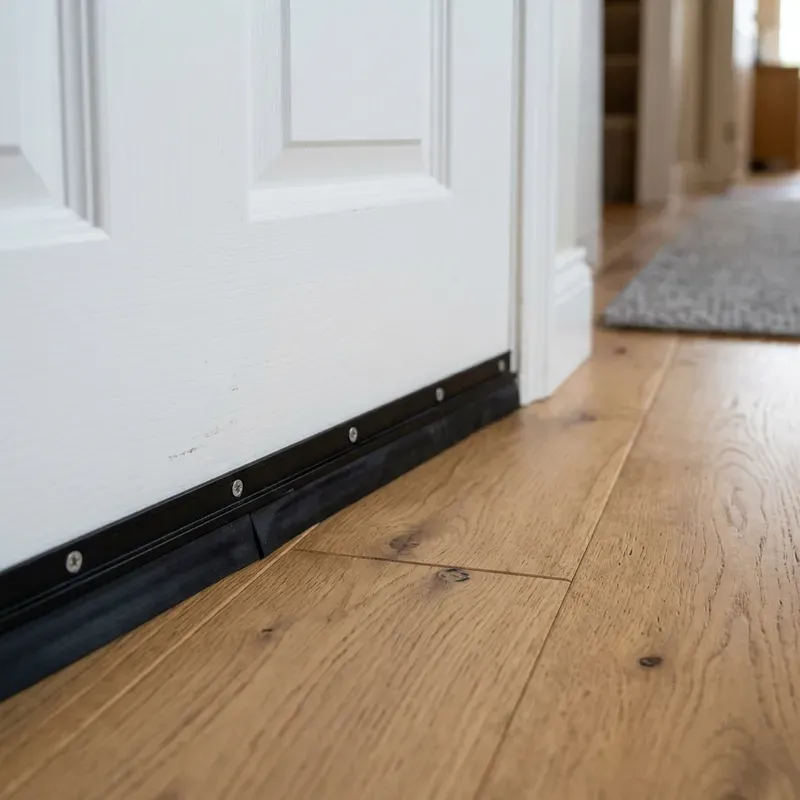
Key takeaways
- A sweep fixes the bottom gap; weatherstripping fixes the sides and top.
- A draft stopper is easiest for renters but less permanent.
- Measure the gap before buying anything.
- Do not make a door so tight that it will not latch or blocks needed airflow.
A reproducible door-seal selection protocol
Close and latch the door, turn off nearby fans, and inspect the perimeter with a flashlight and a strip of tissue. Mark whether movement or visible light occurs at the bottom, hinge side, latch side, or top. Then slide a sheet of paper between the closed door and frame at several points; paper that pulls out with little resistance can indicate weak compression, while paper that cannot be removed or a door that will not latch can indicate excessive thickness or misalignment.
- Measure the bottom gap at both corners and the center. Also record the door thickness and whether the floor or threshold is level.
- Choose by location: a sweep or fitted door bottom for the lower gap, and compressible weatherstripping for the sides and top. A soft brush can tolerate a modestly uneven threshold; a rigid bottom needs a more uniform gap.
- For a temporary trial, use a movable draft stopper and repeat the tissue check. Renters should test removable adhesive on an inconspicuous painted area and obtain permission before drilling.
- After installation, open, close, latch, and lock the door repeatedly. Confirm that the sweep touches lightly rather than scraping and that weatherstripping compresses without forcing the latch.
- Retest every marked point. If leakage remains at a warped slab, damaged threshold, or misaligned frame, request repair instead of stacking additional material.
Do not obstruct an emergency exit, a rated fire door, combustion-air opening, or an undercut used as an HVAC return path. If an interior room becomes stuffy or changes temperature after sealing, remove the restriction and ask building maintenance or an HVAC professional how return air is intended to move.
Diagnosis table
| Product | Best for | Installation | Watch out for |
|---|---|---|---|
| Door sweep | Cold air under exterior doors | Screws or adhesive on one side | Can drag if too low |
| Door bottom | Larger bottom gaps | Wraps around door bottom | Must match door thickness |
| Under-door seal | Rental-friendly bottom gaps | Slides under many doors | May block return airflow on interior doors |
| Foam weatherstrip | Sides and top of frame | Peel-and-stick strips | Can prevent latching if too thick |
Find the leak location
Close the door and check for light, cold air, or moving tissue. If the draft is under the door, focus on a sweep, door bottom, or draft stopper.
If the draft is along the latch side, hinge side, or top, a sweep will not help much. You need weatherstripping on the frame.
When a door sweep is the better choice
A sweep is best for exterior entry doors with a visible bottom gap. It is more reliable than a fabric draft snake because it stays attached when the door moves.
Choose a sweep that lightly touches the threshold without scraping hard. A tight sweep can damage floors or keep the door from closing.
When a door seal is the better choice
Use foam, rubber, or V-strip weatherstripping when the door leaks around the sides or top. The paper test works well: close the door on a strip of paper and pull.
Do not stack thick weatherstripping on all sides at once. Add one area, test the latch, then continue.
Interior bedroom doors are different
A bedroom door sweep can reduce hallway noise or light, but it can also block the under-door gap used by some HVAC systems for return air.
If a bedroom becomes stuffy, hot, or cold after adding a sweep, remove it or choose a less restrictive draft stopper.
How to measure the door gap
Measure before buying because door sweeps, slide-on door bottoms, and weatherstripping are not one-size-fits-all. Close the door, look at the bottom gap, and measure the largest opening with a ruler or a stack of coins. Then check whether the gap is even from hinge side to latch side.
An uneven gap usually means the door, hinges, or threshold are not square. A soft sweep can handle a small uneven gap, but a rigid product may scrape on one side and still leak on the other. For side and top leaks, measure the frame gap with the door closed and choose weatherstripping thin enough for the latch to still catch.
Best order of fixes
- Use a tissue or paper test to locate the actual draft.
- Fix the biggest leak first, usually the bottom gap or latch side.
- Open and close the door several times before adding more material.
- Check the lock, latch, and threshold after installation.
- Retest with the tissue so you know whether the fix worked.
This order prevents the common mistake of adding foam on every edge, making the door hard to close, and still leaving the real bottom draft untouched.
Renter-friendly fixes
- Use a fabric draft stopper for zero-install testing.
- Try a slide-on under-door seal if the door thickness fits.
- Use removable foam tape only after testing paint in a small area.
- Ask management before screwing into an apartment entry door.
Mistakes to avoid
- Do not install a sweep so low that the door drags.
- Do not block required ventilation or emergency exit.
- Do not use exterior-grade adhesive on a rental door without permission.
- Do not assume a bottom sweep fixes side-frame leaks.
When to call a professional
Call a door, weatherization, or maintenance professional if the door is warped, the threshold is damaged, the lock no longer aligns, or water comes under the door.
FAQ
What is the difference between a door sweep and a door seal?
A door sweep seals the bottom gap. A door seal usually means weatherstripping around the sides and top.
Do door sweeps go inside or outside?
It depends on door swing and product type. Many residential sweeps go on the interior face, but follow the product instructions.
What does a door sweep do?
It reduces drafts, light, dust, and insects entering through the bottom gap.
Is an under-door seal better than a sweep?
It can be better for renters because many slide on without screws, but it must fit the door and not block needed airflow.
Can I put a sweep on a bedroom door?
Yes, but watch for stuffiness or HVAC airflow problems if the room depends on an under-door return path.
Bottom vs frame
Sweep = bottom gap. Seal/weatherstrip = sides and top. Most doors need the bottom fixed first.
Related guides
 Room Too Hot? Avoid These Common Cooling MistakesWhen your room is too hot, the wrong moves make things worse. Learn why closing vents, misusing fans and buyin...
 Stuffy Room? Signs of Stagnant Air and Poor VentilationA stuffy room often points to poor air distribution, weak return airflow or pressure imbalance. Learn the warn...
 Smart Thermostats for Renters: Are They Worth It Without Permanent Changes?A renter-focused guide to smart thermostats, portable sensors, landlord permission, apartment thermostats, and...
 Smart Thermostats for Renters: What Actually Works Without PermissionThinking about a smart thermostat in a rental? Learn which models work without permission, when a C-wire matte...