Cooling & Airflow
Room Too Hot? Avoid These Common Cooling Mistakes

When your room is too hot, the wrong moves make things worse. Learn why closing vents, misusing fans and buying single-hose ACs waste money and heat.
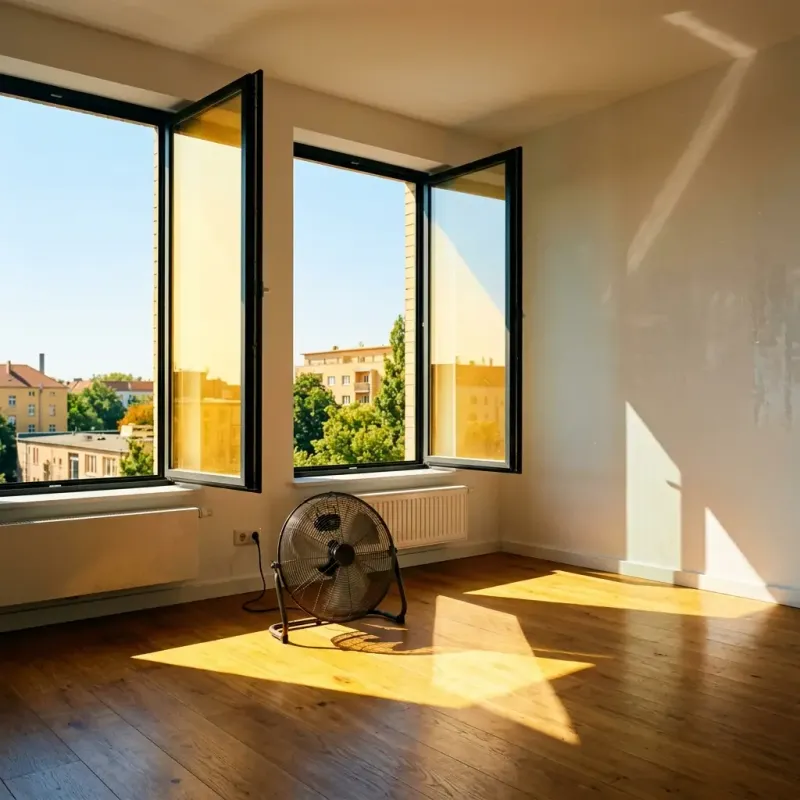
Key takeaways
- Oversized expectations from undersized BTU units cause endless runtimes.
- Poor portable AC venting dumps heat back indoors.
- Closing every door can starve returns.
- Daytime solar gain ignored at noon cannot be fixed at midnight alone.
What to check first
- Is the exhaust hose sealed and short?
- Filter dirty?
- Sun on glass all afternoon?
- Thermostat/ remote setpoint realistic?
Dwell Calm tip
A loosely fitted window plate on a portable AC can erase most of the cooling you paid for.
When to get help
Electrical circuit trips and water leaks under units need careful handling.
Mistakes that keep rooms hot
Long flexible hose loops, unit in the sun, filter clogged, and hoping one small unit cools an open-plan flat through open doorways.
Fix order
Seal venting → shade glass → clean filter → close the cooled zone → only then consider a larger unit.
Night strategy
Flush with cool night air when outdoor dew points allow, then close up before morning heat. Humidity-heavy nights need a different plan than dry nights.
Fix the setup before buying more BTUs
Seal portable AC venting, shorten hoses, clean filters, shade glass, and cool a closed zone. Only then size up.
Open-plan trap
One small unit cannot treat an entire open flat through open doorways forever. Zone first.
Night humidity
Wide-open muggy nights can feel worse. Watch outdoor conditions, not just the clock.
Practical next steps
Test one change at a time and give the room a few hours before judging results. Note outdoor weather, time of day, and whether doors or windows were open. That simple record prevents wasted purchases and gives clearer information if you need a landlord or technician.
Prefer reversible, lease-safe fixes first. Stop and get qualified help for gas smells, electrical faults, active leaks, large mold areas, or equipment that should not be opened by tenants.
For related checks, use the draft, humidity, and room-diagnosis guides on Dwell Calm rather than stacking random gadgets in the same afternoon.
Field notes: Room Too Hot? Avoid These Common Cooling Mistakes
This section adds the decision detail most short guides skip: what to measure, what to try first in a real flat, and when to stop and escalate. It is written for apartments and rentals where permanent renovation is not an option.
Cooling sequence that beats random gadget buys
Order matters: stop solar gain → fix portable AC vent leaks → clean filters → cool a closed zone → only then upsize BTUs. A loosely fitted window plate can erase most of the cooling you paid for.
Fans cool people, not rooms, unless they exhaust hot air when outdoor conditions help. Night flush works when outdoor air is cooler and not swampy; humid heat waves need a different plan than dry nights.
| Mistake | What happens | Fix |
|---|---|---|
| Long hose loops | Heat dumps back | Short, sealed, insulated run |
| Open-plan hopes | One small unit fights whole flat | Close doors; zone first |
| Dirty filter | Weak output + ice risk | Clean on schedule |
| Ignoring afternoon glass | Room pre-heats | Blackout / reflective film by day |
Lease-safe boundaries
Photograph anything you change. Prefer screw-free or fully reversible products on painted surfaces. Ask in writing before altering entry doors, fire doors, or shared building components. Stop for gas smells, electrical faults, active leaks, or large mold — those are not DIY content problems.
When this page is not enough
If symptoms stay extreme after basic checks — room far outside the rest of the home, water damage, combustion appliance concerns, breaker trips — document conditions and contact a qualified professional or building management. Dwell Calm is informational, not a substitute for HVAC, electrical, mold, or legal advice.
The portable AC leak test
With the unit running, feel around the window plate with the back of your hand. Warm air leaking inward means you are cooling the street. Foam the gaps, shorten the hose, and cool one closed room for an hour before judging BTU size.
Stop these first
Leaky window plates, hose loops, dirty filters, and trying to cool the entire open plan with one small unit. Zone and seal, then evaluate.
Follow-up checks
Revisit this problem after weather changes. A fix that works on a calm day may fail on a windy night. Keep a short note of what you installed and when you removed seasonal products.
If you email support or your landlord, include the room, the symptom time of day, and one photo. Clear packets get faster answers.
Follow-up checks
Revisit this problem after weather changes. A fix that works on a calm day may fail on a windy night. Keep a short note of what you installed and when you removed seasonal products.
If you email support or your landlord, include the room, the symptom time of day, and one photo. Clear packets get faster answers.
More detail you can use today
Seal the vent plate, shorten the hose, clean the filter, close the door. Only then talk about a bigger unit.
If a product fights your windows, doors, or lease rules, remove it. A stuck sash or scraped fire door is a worse outcome than a small leftover draft. Prefer reversible kits and keep packaging until you know the fix earned its keep.
When comfort finally stabilizes, stop adding layers. Extra gadgets after the problem is solved mostly add clutter and energy use.
Share what worked with your household so people do not reopen tilted windows or block the radiator you just cleared. Consistency keeps the win.
More detail you can use today
Seal the vent plate, shorten the hose, clean the filter, close the door. Only then talk about a bigger unit.
If a product fights your windows, doors, or lease rules, remove it. A stuck sash or scraped fire door is a worse outcome than a small leftover draft. Prefer reversible kits and keep packaging until you know the fix earned its keep.
When comfort finally stabilizes, stop adding layers. Extra gadgets after the problem is solved mostly add clutter and energy use.
Share what worked with your household so people do not reopen tilted windows or block the radiator you just cleared. Consistency keeps the win.
Related guides
 Drafts Around Outlets and Baseboards: How to Find and Fix Hidden Air LeaksLearn why cold air comes from outlets, switches, baseboards, and trim, plus safe renter-friendly ways to reduc...
 Drafty Windows: Causes and FixesLearn why windows feel drafty, how to tell air leaks from cold glass, and which fixes work for renters and hom...
 Energy Audit Checklist: A Practical Room-by-Room Guide to Finding Wasted EnergyUse this practical energy audit checklist to find drafts, HVAC waste, insulation weak points and electricity d...
 The Renter's Guide to Energy Efficient LightingSwitching to LEDs is one of the easiest energy wins in a rental. Learn which bulbs to buy, how much they actua...
FAQ
What cooling mistake wastes the most effort?
Trying to cool a room while sun, leaks, electronics, or poor airflow keep adding heat faster than the fix can remove it.
Do fans cool empty rooms?
No. Fans cool people by moving air across skin. In an empty room, they add a small amount of motor heat.
Should curtains stay open for daylight?
If direct sun is heating the room, close effective window coverings before the room warms up. Waiting until evening is usually too late.
Sources
About Emma Collins
Home comfort editor. Emma writes from rental living, room measurements, and public EPA / ENERGY STAR guidance — not as a licensed contractor, electrician, or medical professional.
Learn more about Emma ->