Cold Rooms
Why Is One Room in My House So Cold?
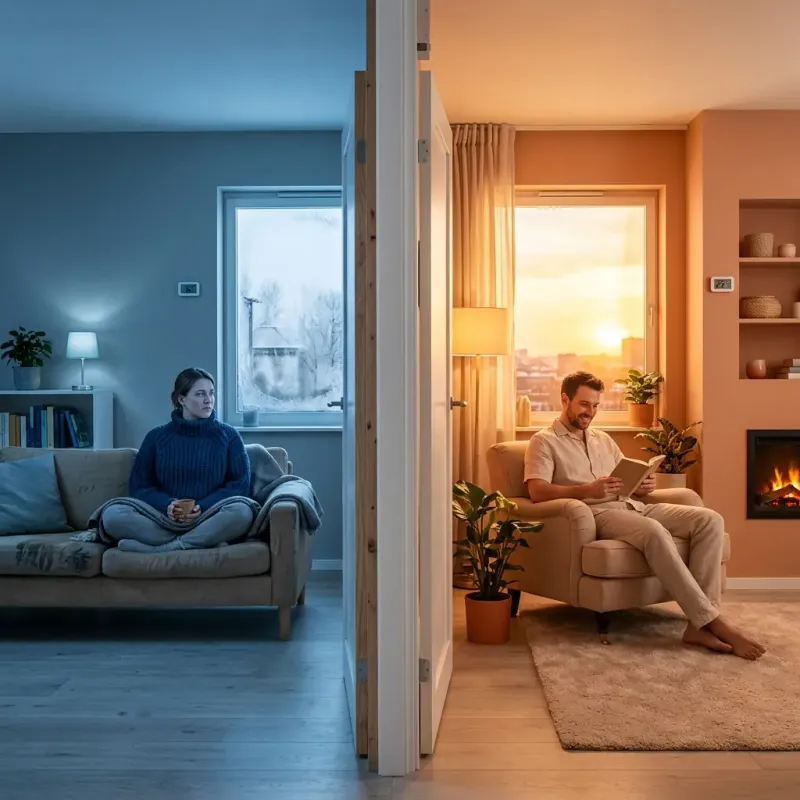
If you keep asking “why is my room so cold” or “why is one room in my house so cold,” the room is usually leaking heat, getting too little supply air, or both. Diagnose before you buy another heater.
Key takeaways
- First decide whether the room is losing heat, receiving weak warm air, or both.
- Airflow checks should come before buying a heater or adding insulation.
- Window and door drafts are common, but cold floors, exterior walls, and duct leaks can matter more.
- Renters should use reversible fixes and document weak heat or airflow with temperature readings.
Why one room stays cold (stacked small losses)
One cold room is rarely a single failure. A drafty window, a blocked supply, a tight bedroom door (no return path), and a floor over a garage or crawl space each steal a little heat. Together they feel like “the heat never reaches this room.” Do not start with another heater. Isolate whether the room is losing heat, not receiving warm air, or both.
What a temperature comparison can show
Place the same thermometer at the same height in the cold room and a nearby comfortable room, away from windows, vents, exterior walls, lamps, and direct sun. Let it stabilize in each location and record readings at the same stage of a heating cycle. Repeat on more than one cycle. A persistent difference does not identify the cause by itself; combine it with supply-air, door-position, draft, and room-location checks. Send the resulting log and photos of unobstructed registers to the landlord or HVAC technician if airflow remains weak.
| Check | What you are testing | If it fails |
|---|---|---|
| Hand or tissue at supply vent | Is warm air actually arriving? | Filter, damper, furniture, or duct issue |
| Door undercut / open door 4 in | Return path when the door is shut | Leave ajar during cycles or add a jumper/transfer grille (ask first) |
| Window/door daylight + incense | Drafts at frames and under-door gap | Removable sweep, V-seal, rope caulk |
| Room over garage / exterior corner | Location heat loss | Rug, curtains, then document for building work |
Project snapshot
Quick diagnosis table
| Symptom | Likely cause | First thing to check | Easy fix | When to call a pro |
|---|---|---|---|---|
| Little air comes from the vent | Closed damper, blocked duct, dirty filter, or duct leak | Hold tissue near the supply register while heat runs | Open register, replace filter, check accessible dampers | If airflow stays weak after filter/register checks |
| Vent blows warm air but room still feels cold | Heat loss through windows, walls, ceiling, or floor | Check windows, outlets, baseboards, and exterior walls | Seal drafts, use curtains correctly, add rugs | If large wall/floor areas stay cold or insulation work is needed |
| Room over garage is cold | Cold floor and weak garage ceiling insulation | Compare floor temperature to hallway | Add thick rug and reduce door drafts | If garage ceiling air sealing or insulation is needed |
| Room warms only when door is open | Poor return-air path or pressure imbalance | Run heat with door open, then closed | Keep door open during cycles; ask about return path | For transfer grille, duct balancing, or door undercut decisions |
| Cold air near window even when closed | Air leak, failed weatherstripping, or cold glass downdraft | Use hand, tissue, or incense test around trim and sash | Weatherstrip, caulk fixed gaps, add film or curtains | If frames are rotten, wet, broken, or unsafe |
Is the vent airflow weak?
Start at the supply vent. During the same heating cycle, compare the cold-room register with a similar register using the same sheet of tissue held the same distance away. This is a screening check, not an airflow measurement. Consistently weaker movement can justify checking the filter, register position, accessible damper, and duct branch; only measured airflow and system diagnostics can establish the cause.
Are furniture or curtains blocking the vent?
A bed, sofa, rug, heavy curtain, or storage bin can redirect warm air before it mixes into the room. Clear the manufacturer-recommended space around supply and return grilles, then compare another full cycle. Do not place objects inside a register or alter a fixed grille.
Is the air filter dirty?
A clogged filter reduces total airflow through the system. The whole house may still get some heat, but the weakest room usually suffers first. Check the filter size and replacement schedule printed on the filter or HVAC cabinet. Replace it if it is visibly loaded with dust or past the normal service interval.
Are the dampers closed or unbalanced?
Some duct systems have balancing dampers near the main trunk lines. If one branch is mostly closed, that room may never receive enough supply air. Make small adjustments and wait a full heating cycle before judging. Do not randomly close many vents around the house; that can increase duct pressure and make the system noisier or less efficient.
Are the windows drafty?
Windows can make a room cold in two ways. Air can leak around the sash or trim, and cold glass can create a downdraft that feels like a draft even when the window is technically closed. If your hand feels moving air near the frame, use the tests in How to Find Drafts in Your House. If the air feels cold but still, the problem may be glass temperature and missing window coverings.
Is the room poorly insulated?
A room with an exterior corner, attic above it, crawl space below it, or old wall insulation loses heat faster than an interior room. Look for cold walls, chilly floors, condensation on the coldest surfaces, and temperature swings after the system shuts off.
Is the room above a garage?
Rooms over garages are classic cold rooms because the floor is exposed to a colder space. A rug can improve comfort underfoot, but the durable fix is usually air sealing and insulation between the garage and room. Renters should avoid opening assemblies and should report large comfort gaps to the property manager.
Does the room have exterior walls?
Two exterior walls, a large window, or a north-facing wall can make a room lose heat faster than the thermostat hallway. That does not always mean the HVAC system is broken; it may mean the room needs better air delivery or better envelope improvements.
Is there a duct leak?
If the register is open and the filter is clean but airflow remains weak, warm air may be escaping into an attic, crawl space, basement, or wall cavity before it reaches the room. Duct leaks are not a good DIY guesswork project if the ducts are hidden or hard to access. A technician can measure airflow and inspect the branch safely.
Is the thermostat in the wrong place?
The thermostat controls the system based on the temperature where it is located, not the coldest room. If the thermostat sits near a sunny hallway, fireplace, kitchen, or warm interior area, the system may shut off before the cold room catches up.
Dwell Calm tip
If you only have time for one test, compare the cold room with the door open and closed while the heat runs. If the room improves with the door open, airflow balance may matter as much as insulation.
Simple tests you can do in 15 minutes
- Measure the cold room and hallway temperature after the heat has run for 15 minutes.
- Compare vent airflow with a tissue at the cold room and a comfortable room.
- Move furniture, curtains, and rugs away from the register.
- Check whether the return path improves when the door stays open.
- Run your hand around window trim, outlets, baseboards, and the door sweep.
- Check the filter and note the date it was last replaced.
Low-cost fixes to try first
- Replace a dirty filter with the correct size and rating.
- Open blocked registers and redirect airflow toward the room center.
- Seal obvious window and door leaks with weatherstripping or removable caulk.
- Use thermal curtains at night and open them on sunny winter days.
- Add a rug over cold floors, especially above garages or crawl spaces.
- Keep the door open during heating cycles if the room lacks a return path.
Renter-friendly fixes
Renters should focus on reversible fixes: removable weatherstripping, rope caulk, tension curtain rods, draft stoppers, rugs, vent deflectors, and a written maintenance request if airflow is weak. Avoid permanent caulk, cutting doors, or modifying ducts without permission.
Mistakes to avoid
- Do not run a space heater on an extension cord.
- Do not block a return grille with furniture.
- Do not close most vents in the house to force heat into one room.
- Do not cover moisture or mold signs with insulation materials.
When it may be an HVAC problem
Suspect HVAC trouble when the supply air is cool, airflow is weak in several rooms, the system short cycles, the filter gets dirty very quickly, or the cold room is connected to a visibly damaged duct. Uneven comfort can be a balancing issue, but it can also point to poor duct design or equipment trouble.
When to call a professional
Call an HVAC professional if the room is more than a few degrees colder after basic fixes, if ducts may be leaking in an attic or crawl space, if electrical heat is involved, or if you notice burning smells, repeated breaker trips, water damage, or suspected mold.
FAQ
Why is one room colder than the rest of the house?
The most common reasons are weak supply airflow, blocked vents, closed dampers, drafty windows, poor insulation, a room over a garage, exterior walls, duct leaks, or a thermostat that does not represent that room.
Can a dirty air filter make one room cold?
Yes. A clogged filter can reduce total system airflow. The farthest or weakest branch of the duct system often becomes the room where the problem is easiest to feel.
Should I close vents in warm rooms to heat a cold room?
Closing a few vents slightly can sometimes help balance airflow, but fully closing many vents can raise duct pressure and reduce system performance. Start with small damper adjustments.
What is the cheapest fix for a cold bedroom?
Move furniture away from vents, replace a dirty filter, seal obvious window drafts, add a door sweep, use thermal curtains correctly, and leave the door open when the system runs.
When should I call an HVAC professional?
Call a professional if airflow is very weak at the register, the room never improves after basic checks, ducts may be leaking, the furnace or heat pump short cycles, or the temperature gap is large.
Interpret the checks together
Weak tissue movement with the door open and closed points toward supply delivery; improvement only with the door open suggests a return-path or pressure issue; moving air at a window points toward leakage; cold but still surfaces point toward heat loss. These checks narrow the investigation but do not replace airflow measurement, pressure testing, or an insulation inspection.
Related guides
 Why Is My Portable AC Not Cooling the Room?Troubleshoot a portable AC that is not cooling, including hose setup, BTU sizing, window kit gaps, filters, si...
 Portable AC vs Window AC: Which One Is Better for Your Room?Compare portable AC and window AC units for cooling performance, efficiency, noise, cost, installation, renter...
 How to Get the Most Out of Your Apartment RadiatorsMaximize heat output, fix common noises, and improve efficiency of steam and hot water radiators.
 How to Reduce Heating Costs in an Apartment You Don't OwnRenter-friendly solutions, behavioral changes, and low-cost improvements to lower your winter utility bills.