Energy Saving
How to Get the Most Out of Your Apartment Radiators
Maximize heat output, fix common noises, and improve efficiency of steam and hot water radiators.
Key takeaways
- Identify whether you have hot-water or steam radiators before touching valves.
- Clear furniture and curtains from the radiator face so heat can enter the room.
- Cold top + hot bottom usually means trapped air — bleed only if your building allows it.
- If every radiator fails the same way, escalate to building maintenance, not gadgets.
What to check first
- Feel the radiator at the top, middle, and bottom after heating has run 30+ minutes.
- Confirm the valve / TRV is open and not trapped behind a curtain.
- Measure clearance in front of the panel (aim for 10–15 cm free).
- Compare this room with another room on the same heating loop.
Dwell Calm tip
In a 38 m² flat, clearing a sofa that blocked half the panel raised the seating-zone feel by about 2°C without bleeding anything. Diagnose blockage before buying boosters.
When to get help
Call maintenance for leaks, steam systems you are not trained on, violent discharge when bleeding, or a stone-cold radiator while the rest of the flat is hot.
Hot-water vs steam: what renters can safely do
Hot-water radiators usually have a small bleed screw at the top corner. Steam systems in older buildings are different: noisy cycles, higher burn risk, and valves that can unbalance the whole riser. If you are unsure which you have, photograph the radiator and ask maintenance before opening anything.
| Symptom | Likely cause | First move |
|---|---|---|
| Top cold, bottom hot | Trapped air | Bleed if allowed |
| Whole panel lukewarm | Valve / balance / undersized heat | Open valve fully; compare other rooms |
| Panel hot, room cold | Blocked front or high heat loss | Clear obstacles; check windows/doors |
| Hammering / clanging | Steam pitch / trap issues | Do not DIY — call building |
Bleeding step-by-step (only when allowed)
- Turn heating down and wait until the radiator is safer to touch.
- Place a cloth and shallow tray under the bleed valve.
- Open a fraction with a radiator key; close when water runs steady without sputter.
- If you have an individual boiler, check pressure against the manual afterward.
Email your agency first in rentals: “Radiator is cold on top and hot below — may I bleed it or will you send maintenance?” Keep the reply.
Furniture, curtains, and TRV mistakes
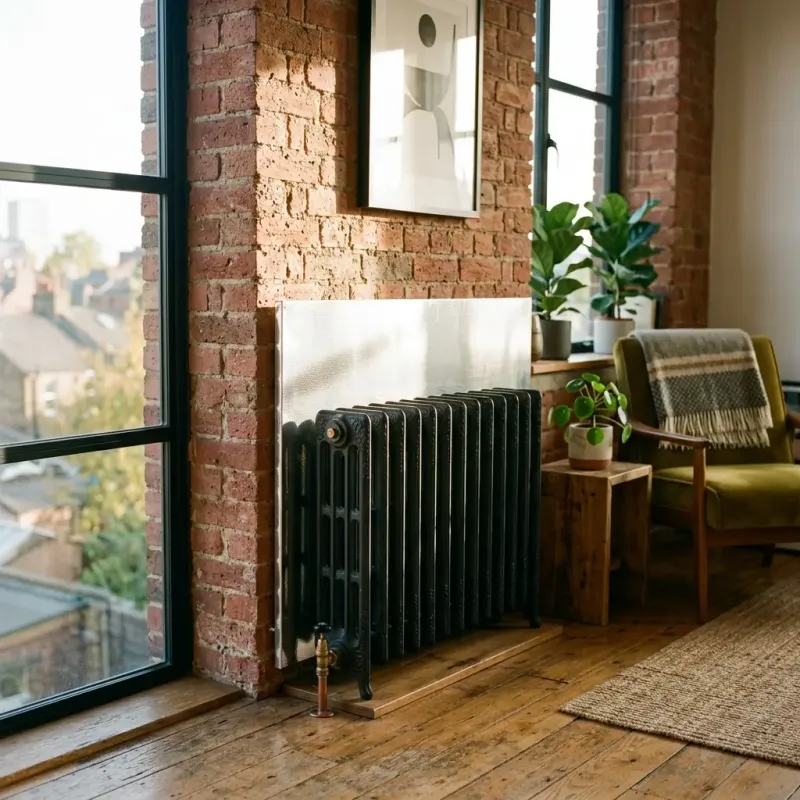
Heat needs a path into the room. Covers, long curtains, and sofas tight against the panel create a hot pocket and a cold center. TRV heads stuffed behind fabric “think” the room is already warm and close early.
Test one change: pull furniture 20 cm for one evening. If the center of the room feels better, you found the bottleneck. Reflective panels behind radiators on exterior walls help modestly; they never beat a clear face.
When a booster fan is worth trying
A quiet fan aimed across (not blasting) the radiator can move warm air toward the seating zone. Run it 30 minutes. No difference? Turn it off — noise without benefit is not efficiency.
A renter decision path for weak radiators
Work in this order: identify system type → clear the face → verify valve/TRV → bleed only if air symptoms and permission exist → document temperatures for the landlord if the building is unbalanced.
Unsafe “efficiency” ideas to skip: blocking vents, sealed combustion air paths, overloaded plug heaters on cheap power strips, or painting thick layers that reduce output on old panels.
Noise, cold spots, and one-radiator rooms
Gurgling often means air. A single cold radiator in a warm flat often means a closed lockshield valve, sludge, or a balancing problem on the riser. Renters should not force valves that look painted shut or corroded.
Steam radiator notes
If your building uses steam, do not treat it like a home hot-water system. Pitch, traps, and building balance are maintenance jobs. Your safe moves are keeping the face clear, reporting hammering, and not blocking vents required for the system.
Measuring whether a fix worked
Put a thermometer at seating height in the center of the room. Record before and two hours after one change. If the number barely moves but the radiator is hot, the room is losing heat as fast as you add it — look at windows, doors, and exterior walls next, using the draft guides.
Related comfort checks
After the radiator itself is working, unfinished draft leaks can still make the room feel cold. Pair this guide with draft detection and under-door sealing if the panel is hot but ankles stay cold.
Weekly winter radiator routine
Once a week in deep winter: confirm valves open, faces clear, listen for new gurgles, and glance for wet spots at unions. Small habits catch problems before rooms freeze.
Clear the face first
Before bleeding anything, pull furniture and curtains off the panel. A blocked hot radiator still leaves a cold sofa zone.
Related guides
 Portable AC vs Window AC: Which One Is Better for Your Room?Compare portable AC and window AC units for cooling performance, efficiency, noise, cost, installation, renter...
 How to Reduce Heating Costs in an Apartment You Don't OwnRenter-friendly solutions, behavioral changes, and low-cost improvements to lower your winter utility bills.
 Renter-Friendly Insulation Hacks That Actually WorkNeed renter-friendly insulation? Learn which non-permanent fixes actually help with cold floors, drafty window...
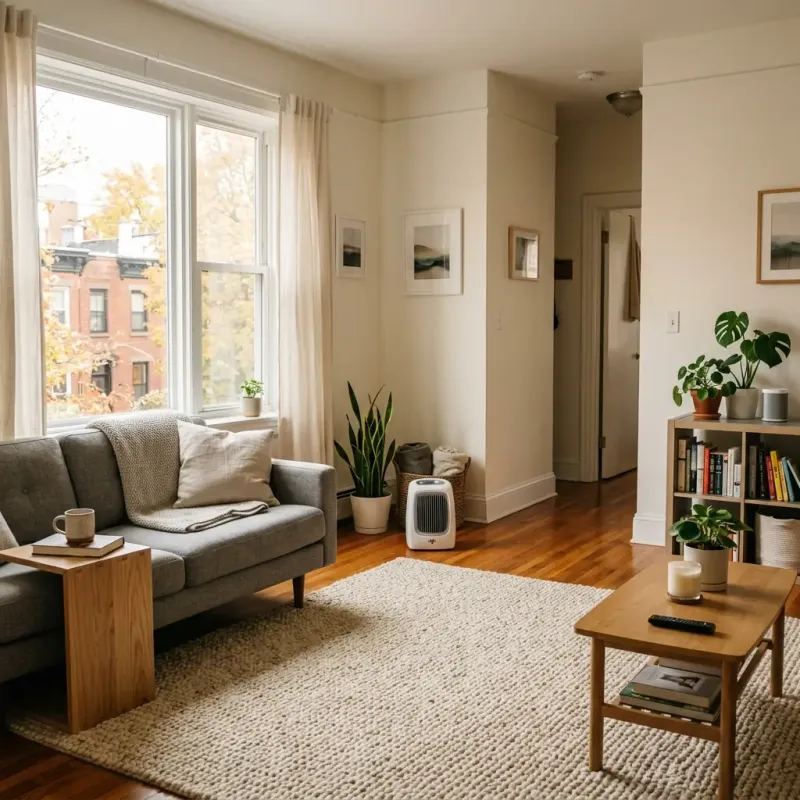 How to Improve Thermal Comfort if You RentNeed better thermal comfort in a rental? Learn which reversible fixes actually help with cold rooms, hot bedro...
FAQ
Should furniture be near a radiator?
Keep furniture, curtains, and storage away from the radiator so warm air can circulate into the room instead of heating a blocked corner.
Can renters bleed radiators?
Only if building rules allow it and the system is designed for tenant access. Many apartment systems should be handled by maintenance.
Why is one radiator room colder?
The radiator may be blocked, air may be trapped, valves may be restricted, or the room may have drafts and heat loss that overpower the radiator.