Indoor Humidity
Normal Room Humidity: Ideal Indoor Humidity Levels by Season and Room
Humidity is easiest to manage when you stop thinking about one perfect number. A good range depends on the room, season, window temperature, and whether you see condensation or feel dryness.
Key takeaways
- A practical indoor target is 30% to 50% relative humidity, with extra caution near 60% (EPA mold and moisture guidance).
- Cold winter windows may require a lower humidity target even if the room feels dry.
- Bathrooms and basements need drying speed, not just a single reading.
- Measure with a hygrometer before buying a humidifier or dehumidifier.
When to get professional help
The 30–50% band is general indoor-comfort guidance drawn from public EPA moisture advice, not a medical limit and not a building-code guarantee. Call a landlord and a qualified professional if you see large or recurring mold, hidden leaks, flooding, HVAC contamination, electrical faults, gas smells, or health symptoms that do not improve after basic moisture control.
Do not treat a hygrometer reading as a diagnosis. This page does not replace industrial hygiene, medical, or contractor advice.
A reproducible room-humidity protocol
Use a digital hygrometer to collect a short time series rather than relying on one reading. Place it at breathing height on a stable surface, away from windows, exterior walls, supply vents, direct sun, cooking steam, showers, humidifiers, and dehumidifiers. Let the instrument acclimate according to its instructions; if no settling time is specified, wait at least 30 minutes before recording a value.
- Record the room, date, time, relative humidity, and relevant conditions such as showering, cooking, laundry, rain, heating, or air-conditioning operation.
- Take readings in the morning and evening for at least three ordinary days. For a bathroom, also note whether visible moisture clears after use rather than treating a brief shower spike as the room baseline.
- Move the same instrument between rooms, allowing it to settle each time. This avoids interpreting normal differences between separate consumer sensors as room differences.
- Compare the pattern with the EPA guidance to keep indoor relative humidity below 60%, ideally 30% to 50%. In cold weather, use window condensation as an additional limit and lower moisture production if glass or frames stay wet.
- Change one factor at a time—such as exhaust-fan use or humidifier output—then repeat readings under comparable conditions. A short log supports a maintenance request when dampness persists.
Consumer hygrometers have measurement limits, so small differences should not be treated as proof of a problem. Recurring condensation, musty odor, visible mold, water staining, or a reading that remains high despite source control matters more than a single borderline value.
Measurement snapshot
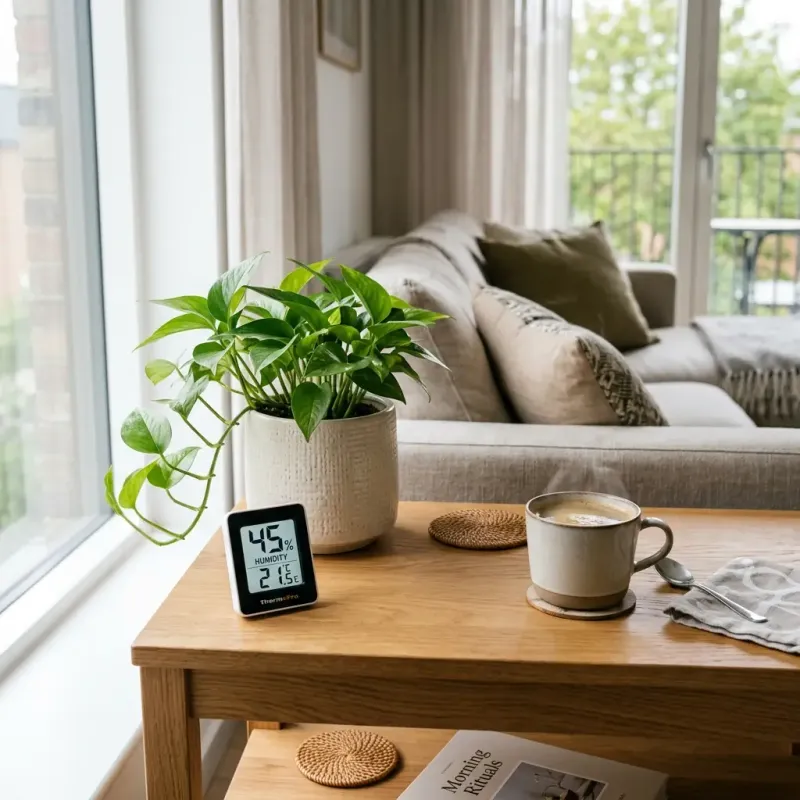
Ideal indoor humidity range
For most homes, a useful target is 30% to 50% relative humidity. The EPA mold guidance recommends keeping indoor humidity below 60%, ideally between 30% and 50%, because moisture control is the main way to reduce indoor mold growth risk. Comfort often feels best around the middle of that range, but cold windows and poorly insulated rooms may require the lower end in winter.
Humidity by room table
| Room | Ideal humidity range | Warning signs | Best fix | Related guide |
|---|---|---|---|---|
| Bedroom | 35% to 50% | Dry throat below range; window condensation above range | Measure overnight; reduce humidifier if glass sweats | Bedroom humidity |
| Living room | 30% to 50% | Static, dry skin, musty fabric, condensation | Balance ventilation, heating, and dehumidification by season | Stuffy apartment |
| Bathroom | Temporary spikes are normal; return below 50% to 60% | Fog that lingers, damp towels, ceiling spots | Run exhaust fan longer and fix leaks | Mold prevention |
| Basement | 30% to 50%, often lower is better | Musty smell, damp boxes, efflorescence, mold spots | Dehumidify and address water intrusion | Condensation clues |
| Apartment | 35% to 50% | Stuffy air, wet windows, odors, dry heat | Ventilate in short bursts and use exhaust fans | Apartment humidity |
Common ways to ask about room humidity
When people search for "normal humidity in room," "normal room humidity," "proper room humidity," "recommended humidity," "room humidity level," or "what humidity should a room be," they are usually looking for a safe comfort range. For most homes, 30% to 50% relative humidity is the practical target, with extra caution when readings stay above 60%.
Bedroom humidity
A bedroom can feel dry at night because heating lowers relative humidity, but adding too much moisture can make cold windows sweat. Aim for comfort without condensation. If the window glass is wet in the morning, lower the humidifier setting, improve ventilation, or move warm air across the room.
Living room humidity
Living rooms usually tolerate the broad 30% to 50% range. Problems often come from many people, plants, cooking, or poor air circulation. If fabrics smell musty, measure before assuming the room only needs fragrance or an air purifier.
Bathroom humidity
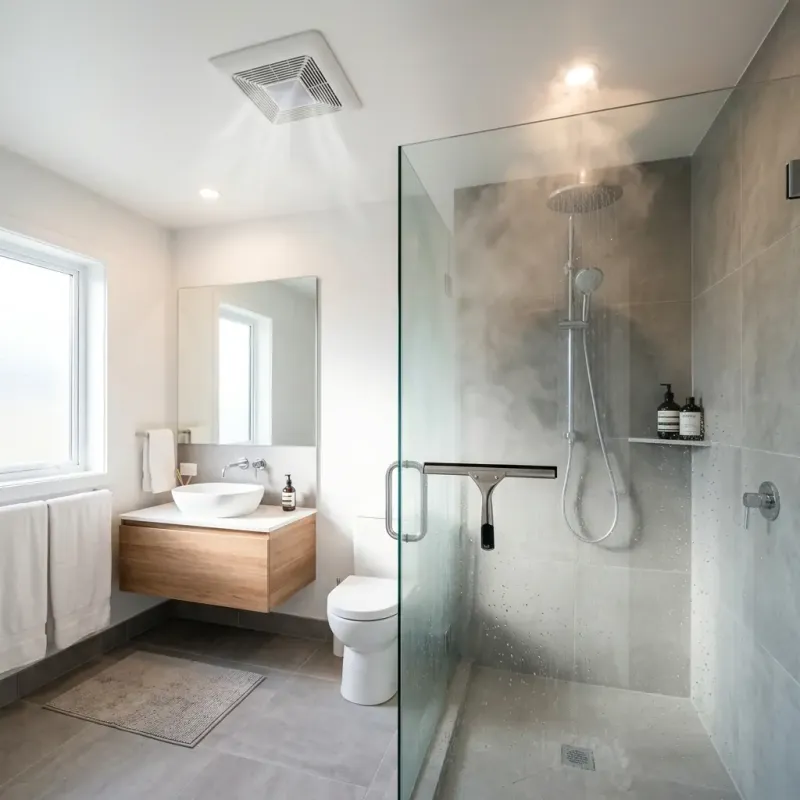
A bathroom will spike during showers. The important question is how quickly it dries. If mirrors, walls, or ceilings stay damp long after use, run the fan longer, clean the fan grille, crack the door, or ask for fan repair.
Basement humidity
Basements need caution because cool surfaces can stay near the dew point. A basement that reads 55% may still feel damp if boxes, carpet, or corners are cold. Persistent basement humidity can point to drainage or water intrusion, not just indoor air.
Winter humidity
In winter, lower humidity can be safer for cold windows. If you keep indoor humidity at 50% while outdoor temperatures are low, condensation may form on weak windows. Drop the target closer to 30% to 40% if condensation appears.
Summer humidity
In summer, high humidity makes rooms feel warmer and can make portable ACs struggle. Air conditioning removes some moisture, but oversized or poorly vented units may cool quickly without drying enough. See Portable AC vs Window AC for cooling tradeoffs.
Signs humidity is too high
- Condensation on windows or toilet tanks.
- Musty odors in closets, bathrooms, or basements.
- Damp bedding, swollen wood, or peeling paint.
- Visible mold spots or recurring mildew.
Signs humidity is too low
- Dry throat, dry skin, static shocks, and cracking wood.
- Houseplants drying unusually fast.
- Comfort improves when humidity rises modestly within the safe range.
Mold and condensation risks
Moisture is the controllable part of most indoor mold problems. If you see recurring condensation, do not just wipe the glass and ignore it. Find the moisture source, improve ventilation, and keep readings under control.
Dwell Calm tip
Take readings in the morning and evening for three days. One number after a shower or humidifier cycle can send you chasing the wrong fix.
How to measure humidity with a hygrometer
Place a digital hygrometer at breathing height, away from windows, vents, bathrooms, direct sun, humidifiers, and cooking steam. Let it sit for at least 30 minutes. For problem rooms, check morning and evening readings for several days because humidity changes with weather and HVAC cycles.
How to lower humidity
- Run bathroom and kitchen exhaust fans during moisture-producing activities.
- Use a dehumidifier in damp basements or apartments.
- Fix leaks and report water intrusion quickly.
- Avoid drying large amounts of laundry indoors without ventilation.
- Use AC correctly in summer and make sure portable AC hoses seal well.
How to raise humidity safely
- Use a clean humidifier only when readings are low.
- Start with a modest setting and recheck windows in the morning.
- Keep humidifiers clean to avoid spreading residue or microbes.
- Do not raise humidity to hide drafts; fix the comfort problem directly.
Humidifier vs dehumidifier
Use a humidifier only when readings are low and surfaces are staying dry. Use a dehumidifier when readings stay high, rooms smell musty, or basements feel damp. If humidity rises because of leaks, wet materials, or poor drainage, equipment may manage symptoms but will not solve the source.
Common mistakes
- Chasing one perfect number instead of watching room symptoms.
- Running a humidifier while windows are already wet.
- Ignoring bathroom fan performance.
- Assuming a musty smell is only an odor problem.
- Putting the hygrometer next to a vent or window and trusting the reading.
FAQ
What is normal room humidity?
A practical target for most rooms is about 30% to 50% relative humidity, with extra caution above 60% because moisture and mold risk rise.
Is 60% humidity too high indoors?
It is not automatically an emergency, but repeated readings around or above 60% deserve attention, especially if there is condensation, musty odor, or poor ventilation.
What humidity should a bedroom be?
Many bedrooms feel comfortable around 40% to 50%, while winter bedrooms may need to stay closer to 30% to 40% if windows are cold and condensation appears.
How do I measure room humidity?
Use a small digital hygrometer placed away from vents, windows, direct sun, humidifiers, and showers. Give it time to settle before reading.
Should I run a humidifier all night?
Only if the room is genuinely dry and the humidifier is clean. Stop or reduce use if windows sweat, surfaces feel damp, or humidity climbs above the recommended range.
Room-by-room RH
Bath and kitchen spike; bedrooms tell the sleep story. Log each room morning and night before buying gear.
Related guides
 Mold Prevention in ApartmentsMoisture control, condensation, and when to involve the landlord.
 Condensation on WindowsWhat sweating glass usually means in winter rentals.
 Bedroom HumidityNight readings, dry air, and window condensation.
 Dehumidifier vs Fan vs WindowWhich moisture move to try first in a rental.
 How to Make a Room Less StuffyFans, vents, and stale-air checks without a renovation.