How to Dehumidify an Apartment Without Making It Feel Stale
Practical ways to lower apartment humidity, reduce damp air, prevent condensation, and improve ventilation without making permanent changes.

Key takeaways
- Use a hygrometer before deciding the room is too humid.
- Stop moisture at showers, cooking, laundry, and leaks.
- Fans move air, but they do not remove moisture.
- Persistent dampness, mold, or water stains should be reported, not covered up.
A reproducible apartment dehumidification protocol
Begin with evidence, then change one moisture source or control at a time. Place a digital hygrometer at breathing height away from windows, vents, direct sun, showers, cooking steam, and the dehumidifier outlet. Let it settle according to its instructions and log morning and evening relative humidity for at least three ordinary days, along with showering, cooking, laundry, rain, heating, and air-conditioning use.
- Inspect under sinks, around plumbing, at window frames, behind furniture on exterior walls, and near ceilings for water stains, wet materials, musty odor, or visible growth. Report active leaks and building defects promptly.
- Reduce avoidable moisture: use lids when cooking, exhaust steam outdoors where a working fan is provided, shorten high-steam showers, spread wet towels to dry, and avoid drying laundry indoors without effective exhaust.
- Check exhaust safely by holding tissue at the grille. Do not remove wiring or ductwork. A fan that does not run, will not hold light tissue, or appears to discharge into a building cavity should be reported for qualified inspection.
- Ventilate only when outdoor air will help. Weather reports showing relative humidity alone can be misleading because warmer air can hold more moisture; dew point or humidity ratio is a better comparison. When uncertain in muggy weather, keep windows closed and use mechanical drying.
- If readings remain high, operate a listed portable dehumidifier with doors and windows closed, clearance around its air paths, a clean filter, and a safe drainage arrangement. Follow the manual for placement, temperature limits, electrical supply, and cleaning.
- Repeat the log for several days under similar use. Success means a sustained downward pattern plus faster drying and less condensation—not one low reading beside the machine.
Moisture-absorbing tubs have limited capacity and are not substitutes for fixing leaks or controlling whole-room humidity. Never place a dehumidifier where it can be splashed, use a damaged cord, overload an extension lead, or leave drainage where overflow can damage the apartment. Escalate visible mold, wet drywall, sewage, recurring water entry, or persistent high humidity to the landlord or a qualified moisture professional.
Diagnosis table
| Situation | Likely cause | First check | Best fix |
|---|---|---|---|
| Window condensation | Indoor humidity meeting cold glass | Check hygrometer and window temperature | Lower humidity and improve airflow |
| Musty bedroom | Poor ventilation or hidden moisture | Smell corners, closets, and exterior walls | Ventilate and look for leaks |
| Damp bathroom | Steam not exhausted | Check fan strength with tissue | Run fan longer or report weak fan |
| Whole apartment humid | Outdoor humidity or moisture sources | Compare indoor and outdoor conditions | Close windows and dehumidify |
Measure humidity before changing anything
A hygrometer is cheap and removes guesswork. Place it away from windows, vents, humidifiers, and bathrooms. Check readings morning and evening for a few days.
A practical comfort target is usually 30% to 50% relative humidity. Persistent readings above 60% deserve attention, especially with condensation or musty smells.
Reduce moisture at the source
Run the bathroom fan during showers and for about 20 minutes afterward. If there is no fan, open the door after showering and use a window only when outdoor air is not humid.
Cover pots while cooking, avoid drying laundry indoors, and report plumbing leaks quickly. A dehumidifier works much harder if moisture keeps being added.
Use ventilation without making humidity worse
Opening windows helps only when outdoor air is drier than indoor air. In humid weather, open windows can make the apartment damper.
Use short cross-ventilation when outdoor conditions are good. Otherwise, rely on exhaust fans, source control, and a dehumidifier.
Use a dehumidifier correctly
Keep windows and exterior doors closed while the dehumidifier runs. Place the unit where air can circulate, clean the filter, and empty the tank before it shuts off.
If one room is the problem, run the unit in that room first. If the whole apartment is damp, move it between zones and track readings.
A simple weekly humidity routine
Apartment humidity is easier to manage when you treat it like a pattern, not a one-time emergency. Check the bedroom in the morning, the bathroom after showers, and the living area in the evening. Write down the reading only when it seems high or uncomfortable.
- Monday: clean or check exhaust fan grilles and dehumidifier filters.
- After showers: run the fan and leave the door open when privacy allows.
- After cooking: run the kitchen fan or open a window briefly if outdoor air is dry.
- Weekly: pull furniture a few inches from exterior walls and check for damp corners.
- Monthly: inspect windows, closets, and under sinks for condensation or leaks.
This gives you useful evidence if you need to contact a landlord. A photo of condensation plus a humidity reading is much stronger than saying the apartment feels damp.
Room-by-room priorities
Bedrooms need stable humidity because bedding, closets, and closed doors trap moisture overnight. Bathrooms need fast exhaust after showers. Kitchens need source control from boiling water, dishwashers, and wet towels. Closets need airflow more than fragrance.
If you can only buy one tool, buy a hygrometer first. If readings stay high after ventilation and source control, then choose a dehumidifier sized for the dampest zone rather than the whole apartment on paper.
Renter-friendly fixes
- Use plug-in hygrometers in the bedroom and main living area.
- Run existing exhaust fans and report weak or broken fans.
- Keep furniture slightly away from cold exterior walls.
- Use a portable dehumidifier instead of permanent equipment.
- Document leaks, mold, or repeated condensation with photos and dates.
Mistakes to avoid
- Do not run a dehumidifier with windows open during humid weather.
- Do not use fragrance to cover a musty smell.
- Do not ignore condensation behind curtains or furniture.
- Do not set a humidifier and dehumidifier to fight each other.
When to call a professional
Contact your landlord, building maintenance, or a qualified mold/moisture professional if humidity stays high despite source control, or if you see mold, water stains, leaking windows, plumbing leaks, or damaged drywall.
FAQ
What humidity should an apartment be?
A practical target is usually 30% to 50% relative humidity. Persistent readings above 60% can increase condensation and mold risk.
How do I dehumidify an apartment without a dehumidifier?
Use exhaust fans, reduce shower steam, cover cooking pots, avoid indoor laundry drying, and ventilate only when outdoor air is drier.
Should windows be open with a dehumidifier?
Usually no. Keep windows closed unless outdoor air is drier than indoor air.
Why is an apartment damp?
Common causes include showers, cooking, wet laundry, poor exhaust, leaks, humid weather, and cold surfaces.
When should I report humidity to my landlord?
Report repeated condensation, mold smell, visible mold, leaks, or broken fans.
Source then machine
Fix showers, drying, and leaks before running a dehumidifier 24/7. Machines treat symptoms; sources decide whether the smell returns.
Related guides
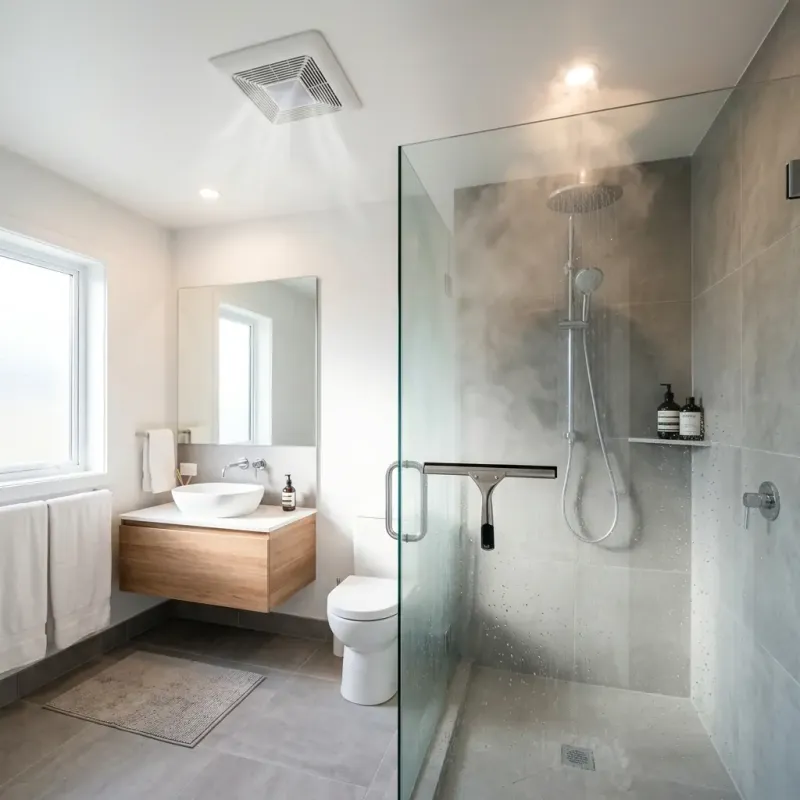 Mold Prevention in Apartments: What You Can ControlLearn the basics of mold prevention in apartments, including humidity control, condensation checks, airflow an...
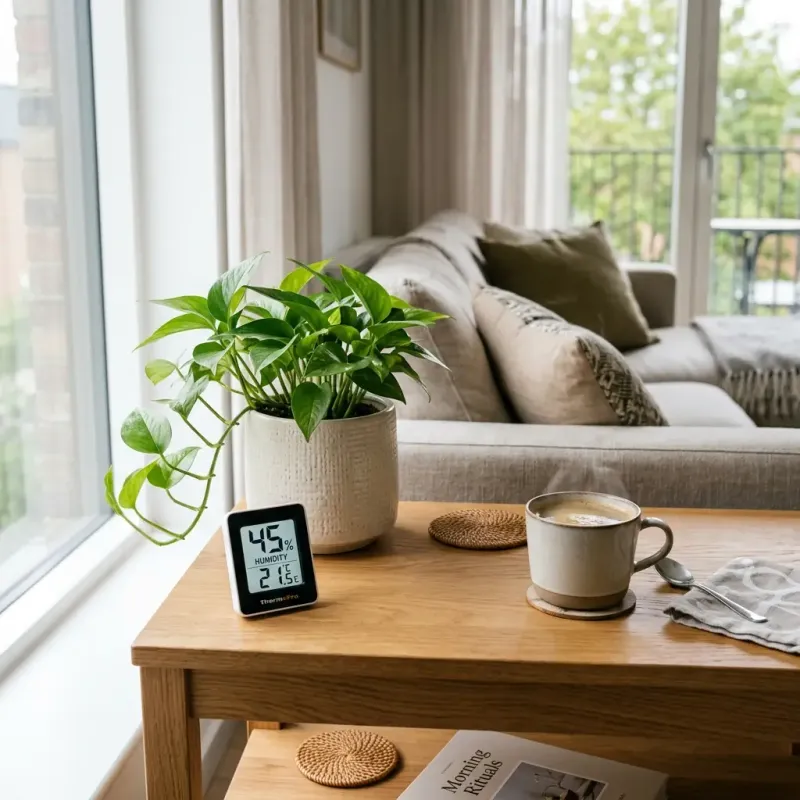 Normal Room Humidity: Ideal Indoor Humidity Levels by Season and RoomLearn ideal room humidity levels by season and room, warning signs of high or low humidity, how to measure wit...
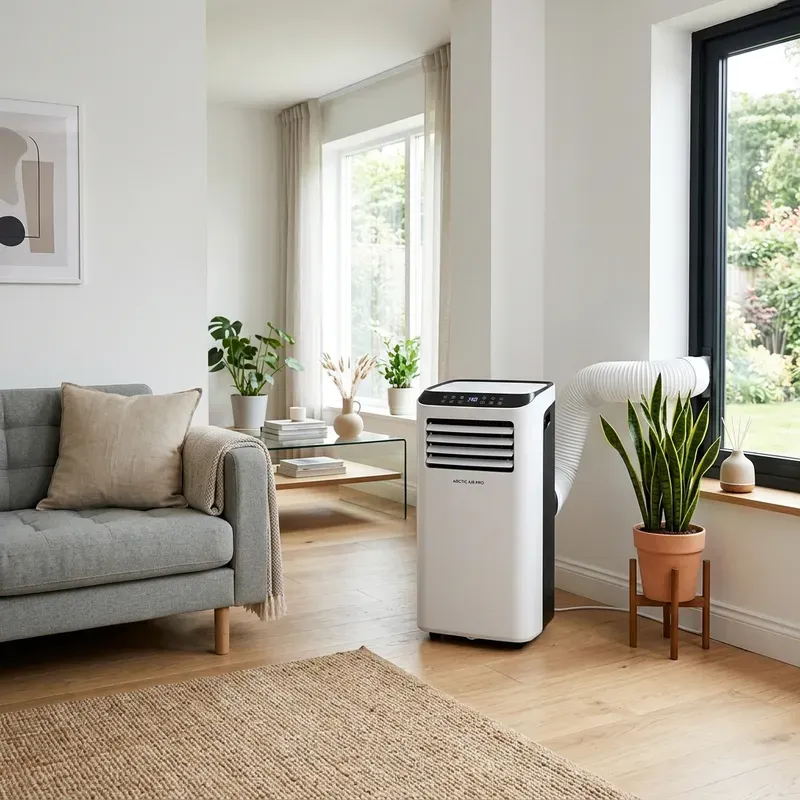 Why Is My Portable AC Not Cooling the Room?Troubleshoot a portable AC that is not cooling, including hose setup, BTU sizing, window kit gaps, filters, si...
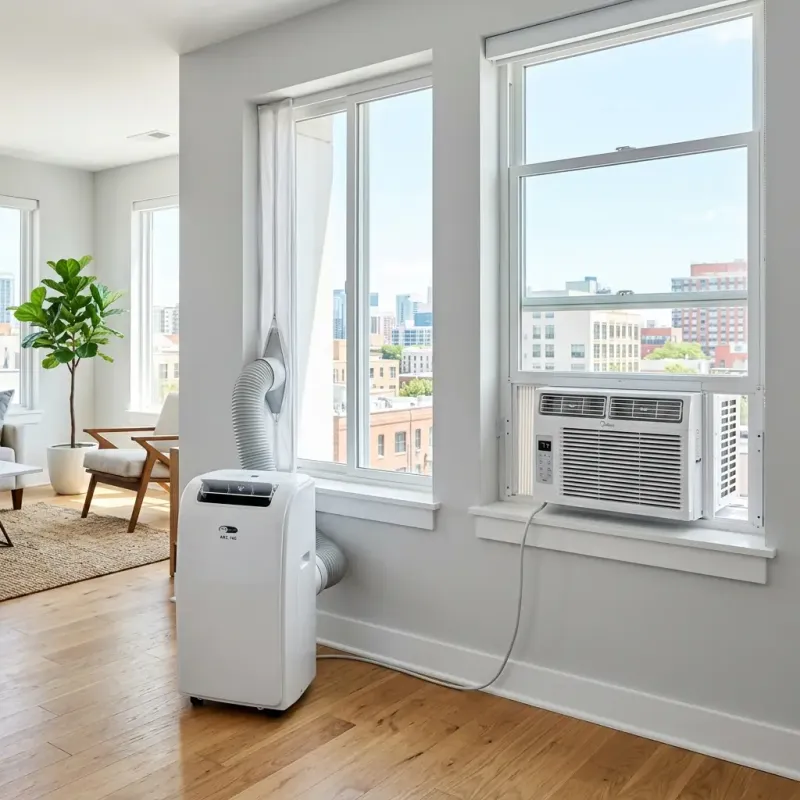 Portable AC vs Window AC: Which One Is Better for Your Room?Compare portable AC and window AC units for cooling performance, efficiency, noise, cost, installation, renter...