Apartment Comfort
Why Is My Apartment So Stuffy?
A stuffy apartment usually needs better air exchange, better air movement, or better humidity control. Guessing which one matters can waste money.
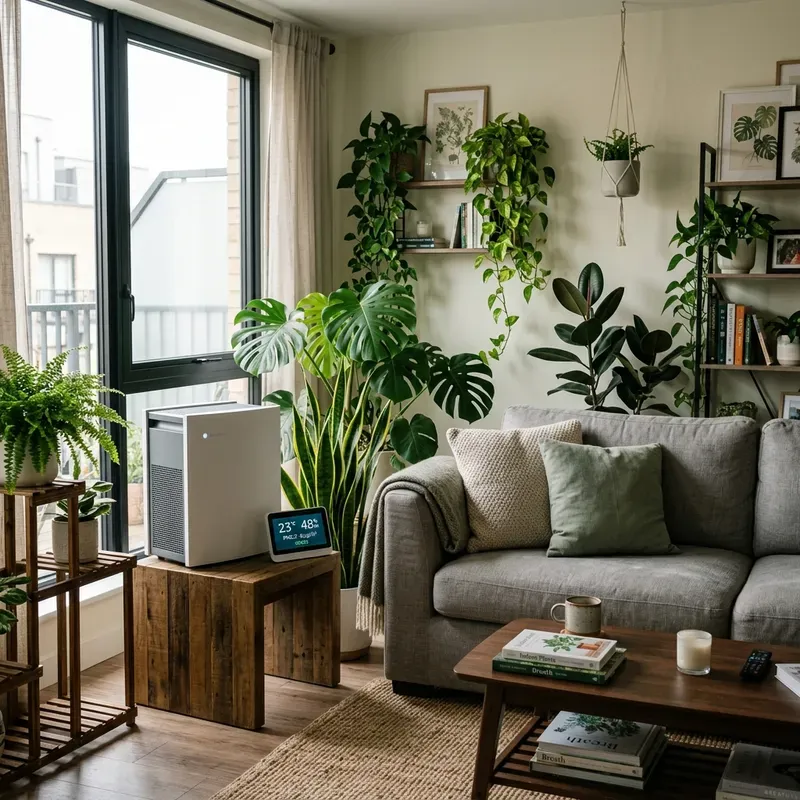
Common causes
| Symptom | Likely cause | First check | Fix |
|---|---|---|---|
| Air feels heavy and damp | High humidity | Hygrometer reading | Run exhaust fans, dehumidify, fix moisture sources |
| Smells linger | Poor air exchange | Window and fan response | Cross-ventilate in short bursts |
| Bedroom gets stale at night | Closed door and weak return path | Door open vs closed | Improve air path and fan placement |
| AC runs but room feels clammy | Oversized or poorly installed cooling | Runtime and humidity | Adjust fan mode, seal portable AC kit |
Simple checks
- Measure humidity for a full day.
- Run the bathroom fan with a tissue near the grille to see if it pulls air.
- Open two windows briefly and see if odor or heaviness improves.
- Check HVAC filter condition if you have access.
- Compare bedroom comfort with the door open and closed.
Renter-friendly fixes
- Use exhaust fans during showers and cooking, then leave the door open afterward.
- Place a fan to move air out of the stale room, not just at your face.
- Keep interior doors open when possible.
- Use a dehumidifier if humidity stays high.
- Submit a maintenance request for weak bathroom fans or blocked vents.
When to ask for help
Ask the landlord or a professional if you smell persistent mustiness, see mold, have no working exhaust fan, or suspect blocked HVAC vents. Stale air plus moisture is more serious than stale air alone.
FAQ
Can an air purifier fix a stuffy apartment?
An air purifier can reduce particles, but it does not add fresh air or remove humidity. Fix ventilation and moisture first.
Does opening a window always help?
It helps when outdoor air is reasonable and the apartment needs air exchange. It can worsen comfort during humid or smoky conditions.
Why is my bedroom stuffy at night?
Closed doors, body moisture, weak return air, and low air movement often make bedrooms stale overnight.
Can high humidity make an apartment feel stuffy?
Yes. Humid air feels heavier and holds odors longer.
Should I call maintenance?
Yes if exhaust fans do not work, vents are blocked, mold appears, or odors persist.
Practical apartment checks before spending money
Apartment comfort problems need a slightly different approach because many permanent fixes belong to the property owner. Start with things you can observe and document: temperature gaps, humidity readings, weak airflow, drafts at doors or windows, condensation, stale smells, and whether the problem changes when doors or windows are open.
| Check | Why it matters | Renter-safe first move |
|---|---|---|
| Temperature notes | Shows whether one room is outside the normal pattern | Record morning, afternoon, and night |
| Humidity readings | Separates damp air from stale air | Use a hygrometer for several days |
| Window and door edges | Finds leaks you can often reduce reversibly | Use draft stoppers or removable seals |
| Maintenance issues | Leaks, mold, electrical, and HVAC faults need repair | Send clear photos and written notes |
Renter note
Do not make permanent changes without permission. The strongest renter strategy is reversible comfort work plus clear documentation for problems the landlord or building manager must address.
When not to DIY
Stop and request help for leaks, visible mold, electrical issues, unsafe heaters, damaged windows, or HVAC equipment that does not operate normally.
Before you move on
Make one change at a time and give the room enough time to respond. If you seal a draft, move a fan, change curtain habits, or adjust ventilation all at once, it becomes hard to know which step actually helped. Take a quick note of the room condition before and after: temperature, humidity, time of day, weather, and whether doors or windows were open.
This simple record is useful for two reasons. It prevents wasted purchases, and it gives you better evidence if the problem needs a landlord, HVAC technician, electrician, insulation contractor, or mold professional. Comfort problems are easier to solve when the pattern is clear.
A step-by-step stuffiness test
- Describe the sensation. Separate heat, humidity, odor, irritation, and low air movement; ?stuffy? can refer to different problems.
- Measure temperature and humidity. Place instruments away from windows, vents, kitchens, and bathrooms and record conditions when symptoms are strongest.
- Compare rooms. Note whether the problem follows a closed bedroom door, cooking, showering, occupancy, or HVAC operation.
- Check accessible airflow paths. Make sure supply and return grilles are not covered and test installed exhaust with a lightweight tissue held near, not inside, the grille.
- Try controlled air exchange. When outdoor air is suitable, briefly open windows on different sides or use existing mechanical ventilation, then note which symptom changes.
- Change one variable. Test door position, exhaust use, moisture control, or fan placement separately so the result remains interpretable.
More clues and what they mean
| Symptom | Possible cause | Check | Action |
|---|---|---|---|
| Odor clears quickly with outdoor air | Insufficient air exchange | Compare before and after suitable ventilation | Use designed ventilation and report persistent failure |
| Air feels damp and windows fog | Excess moisture | Review hygrometer readings and wet-room activity | Use exhaust, control sources, and dehumidify if needed |
| Bedroom worsens only with door closed | Weak return-air path or low circulation | Compare otherwise similar nights | Keep the path open when safe; request HVAC review if persistent |
| Musty odor remains after ventilation | Damp material or hidden moisture | Look for accessible staining, leaks, or condensation | Document and request inspection |
| Particles or irritation dominate | Indoor source or filtration issue | Note timing with cleaning, smoke, cooking, or system operation | Remove the source when safe and follow equipment maintenance rules |
Errors to avoid
- Assuming a purifier supplies outdoor air or removes humidity; filtration and ventilation serve different functions.
- Opening windows when outdoor smoke, extreme humidity, or another outdoor hazard would worsen conditions.
- Blocking vents or using fragrance to mask a persistent odor.
- Replacing landlord-controlled filters with an incompatible type or opening HVAC equipment.
- Sealing every gap while installed exhaust or ventilation is not working.
- Using combustion appliances for heating or ignoring a fuel odor or carbon-monoxide alarm.
Renter limits and when to escalate
Renters can remove ordinary indoor odor sources, use installed exhaust, keep accessible grilles clear, manage moisture, and adjust portable fans without modifying the building. They should not enter ducts, alter common ventilation, disable alarms, or repair combustion or electrical equipment. Record the room, time, humidity, odors, fan response, and whether opening a door or window changed the problem.
Notify the landlord about nonworking exhaust, blocked or damaged vents, recurring condensation, leaks, visible growth, persistent mustiness, or HVAC behavior that remains abnormal after accessible checks. Leave immediately and follow emergency guidance for a fuel odor, carbon-monoxide alarm, smoke, or acute symptoms. Ongoing health symptoms require medical advice; a comfort checklist cannot identify their cause.
Distinguish air movement from air exchange
A portable fan can make occupants feel cooler and can mix stagnant zones, but it does not automatically replace indoor air with outdoor air. If a fan changes the sensation but odors, moisture, or morning stuffiness remain, the apartment may still need effective exhaust or outdoor-air exchange. Conversely, a room may receive adequate fresh air yet feel stagnant because furniture, a closed door, or poor fan placement prevents circulation through the occupied area.
Test these functions separately. First use a fan with windows unchanged and note whether only air movement improves. On a different suitable period, use the building's ventilation or briefly open available windows while keeping the fan arrangement unchanged. Outdoor smoke, pollution, extreme humidity, or unsafe window conditions are reasons not to use open-window testing. Persistent problems with installed ventilation belong in a documented maintenance request.
Related guides
 How to Keep a Room Warmer Without Turning Up the HeatLow-cost and renter-friendly ways to keep a room warmer by reducing drafts, improving airflow, using curtains,...
 Mold Prevention in Apartments: What You Can ControlLearn the basics of mold prevention in apartments, including humidity control, condensation checks, airflow an...
 Normal Room Humidity: Ideal Indoor Humidity Levels by Season and RoomLearn ideal room humidity levels by season and room, warning signs of high or low humidity, how to measure wit...
 Why Is My Portable AC Not Cooling the Room?Troubleshoot a portable AC that is not cooling, including hose setup, BTU sizing, window kit gaps, filters, si...