Drafts & Windows
Drafty Windows: Causes and Fixes
A drafty window is not always one problem. It can be moving air, cold glass, failed seals, or missing trim insulation.
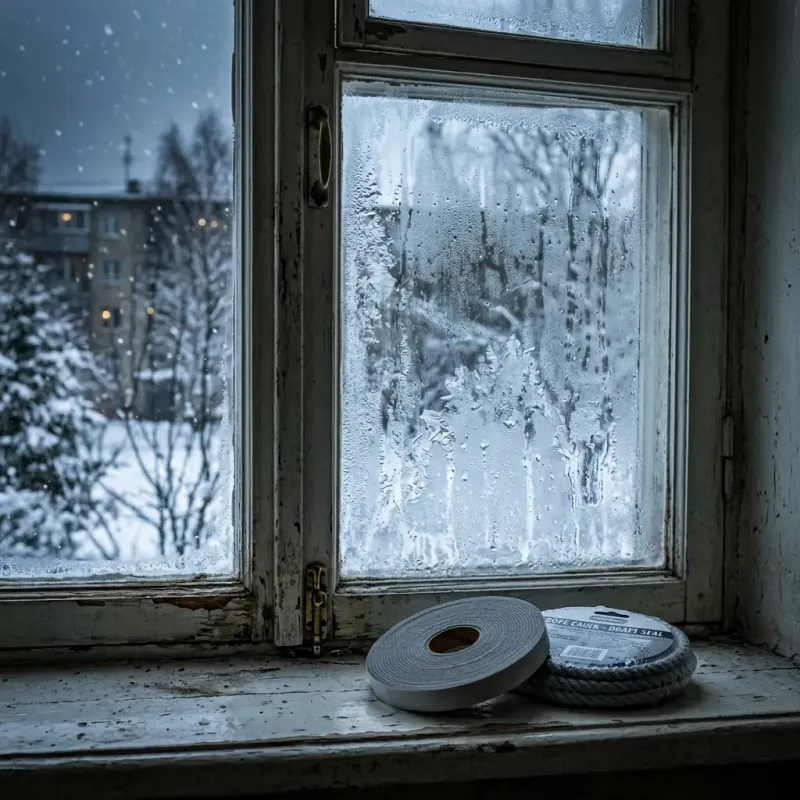
A reproducible window-draft protocol
Choose a cold or windy day, close and lock the window, and turn off nearby fans that could move the test material. Hold a narrow strip of lightweight tissue a short distance from the sash edges, meeting rail, lock, sill, side jambs, and trim. Note whether it consistently moves toward or away from a particular joint. Keep the tissue clear of heaters and moving hardware. Avoid candles, incense, matches, and other smoke or flame tests because they add fire and indoor-air risks.
| Observable result | Likely explanation | Appropriate first response | Retest criterion |
|---|---|---|---|
| Tissue moves at an operable sash | Worn weatherstripping, weak lock compression, or poor alignment | Clean the contact area; adjust the lock only if permitted; replace compatible weatherstripping | Window still opens, closes, locks, and shows less tissue movement |
| Tissue moves at fixed trim | Gap at casing or frame | Use removable sealant in a rental or approved caulk on a dry, sound fixed joint | No movement at that joint; drainage remains open |
| No tissue movement, but glass feels cold | Cold-surface downdraft or radiant discomfort | Use a properly fitted curtain or seasonal interior film | Comfort improves without hidden condensation |
| Water stains, soft wood, or wet cavity | Water entry or frame failure | Stop and request qualified inspection | Cause is repaired before cosmetic sealing |
- Make a simple sketch of the window and mark each point where tissue moves.
- Apply only the fix matched to that joint; do not seal tracks, weep holes, locks, or required openings.
- Operate and lock the window several times to confirm the material does not bind the sash.
- Repeat the tissue check in the same locations under similar weather. Record “movement,” “reduced movement,” or “no movement” rather than inventing a numeric severity scale.
- Check for condensation over the next several days and remove or revise a temporary treatment if it traps water.
Temperature readings taken before and after a small repair are easily affected by weather, heating cycles, sunlight, and sensor position. A controlled professional blower-door or infrared assessment is more appropriate when quantified whole-building leakage or heat loss is needed.
Common causes of drafty windows
Check the sash, lock, meeting rail, sill, side jambs, trim-to-wall gap, and the area below the sill. Older windows often leak at several small points instead of one dramatic crack. Cold glass can also cool the air beside it, creating a falling air current that feels like a leak.
Window diagnosis table
| What you notice | Likely cause | Best first fix | Renter-safe? |
|---|---|---|---|
| Moving air at sash | Worn weatherstripping or poor lock compression | Replace or add weatherstripping | Often yes |
| Air at trim edge | Gap behind casing | Caulk fixed gap or use removable sealant | Depends |
| Cold glass, no moving air | Low surface temperature | Thermal curtains or interior film | Yes |
| Water stains or rotten frame | Leak or frame failure | Professional repair | Report it |
Fixes that match the problem
Use weatherstripping for moving window parts, caulk for fixed trim gaps, and window insulation film for seasonal leakage across the whole opening. Use thermal curtains for comfort near cold glass, especially at night. For a detailed comparison, read Thermal Curtains vs Window Film.
When the window is not the only issue
If the room stays cold even after sealing, connect the window work to a room-level diagnosis. Weak airflow, a room over a garage, or poor insulation can make a window feel like the only problem when it is only one piece.
Renter-friendly fixes
- Use rope caulk that removes at the end of winter.
- Install temporary plastic window insulation film over the frame.
- Add heavy curtains with a tension rod where drilling is not allowed.
- Use a fabric draft stopper at the sill if air leaks below the sash.
- Document broken locks, rotten frames, or water leaks for maintenance.
Mistakes to avoid
- Do not caulk a window shut unless it is a planned seasonal seal and fire egress is not affected.
- Do not block weep holes that allow water to drain.
- Do not ignore condensation between panes; that points to failed glazing seals.
- Do not buy curtains before checking whether air is actually leaking.
FAQ
Why are my windows drafty?
Drafty windows are usually caused by worn weatherstripping, gaps around trim, poor sash alignment, missing locks, cracked caulk, or cold glass that creates a downdraft.
Can window film fix drafts?
Plastic insulation film can reduce seasonal air leakage if installed over the frame. Solar-control film on the glass helps more with heat and glare than with air leaks.
Are thermal curtains enough for drafty windows?
Thermal curtains improve comfort near cold glass, but they do not seal air leaks around the frame. They work best after obvious leaks are sealed.
Should renters caulk windows?
Renters should use removable rope caulk or temporary weatherstripping unless the lease or landlord allows permanent caulk.
When should a window be repaired or replaced?
If the sash will not close, the frame is rotten, glass is cracked, water enters, or condensation appears between panes, ask a landlord or window professional.
Practical draft checks before sealing
Draft fixes work best when you identify whether air is moving through a joint, around trim, below a door, through an outlet area, or from a larger building gap. A cold surface is not always an air leak. Cold glass can feel drafty because air cools against it and drops, even when the window is closed well.
| Check | What it tells you | Low-risk first move |
|---|---|---|
| Tissue test | Shows moving air at a small gap | Test sash, trim, doors, and baseboards |
| Paper test at doors | Shows weak compression or poor contact | Check sweep and weatherstrip fit |
| Cold glass without movement | Suggests surface temperature, not a leak | Use curtains or window film appropriately |
| Outlet or baseboard draft | Suggests wall or floor air movement | Use safe gaskets or document for repair |
Renter note
Use reversible fixes first: removable weatherstripping, rope caulk where allowed, draft stoppers, curtains, rugs, and outlet gaskets. Avoid permanent caulk, drilling, or altering doors without permission.
When not to DIY
Do not seal around wet frames, rotten wood, electrical problems, combustion appliances, or unknown wall cavities without advice. The wrong seal can trap moisture or create safety problems.
Renter ladder
Rope caulk → weatherstrip → curtains → film. Climb one rung per week and retest.
Related guides
 Bedroom Humidity: What Level Is Best for Sleep?Understand the best bedroom humidity range for sleep comfort, dry air, condensation, humidifiers, dehumidifier...Best Humidity Level for Sleeping: Bedroom Comfort GuideThe best bedroom humidity level for sleep, dry air, humid bedrooms, condensation, mold risk, and how to measur...
 Blackout Curtains vs Window Film: Which Helps More?Compare blackout curtains and window film for cold rooms, hot rooms, privacy, drafts, sunlight, renters, and c...
 Cold Room Checklist: 17 Things to Check Before You Spend MoneyA room-by-room checklist for cold rooms in house problems, including airflow, drafts, insulation clues, vents,...