Indoor Humidity
Bedroom Humidity: What Level Is Best for Sleep?

Sleep comfort matters, but a bedroom humidity target also has to respect cold windows, bedding, ventilation, and moisture from people breathing overnight.
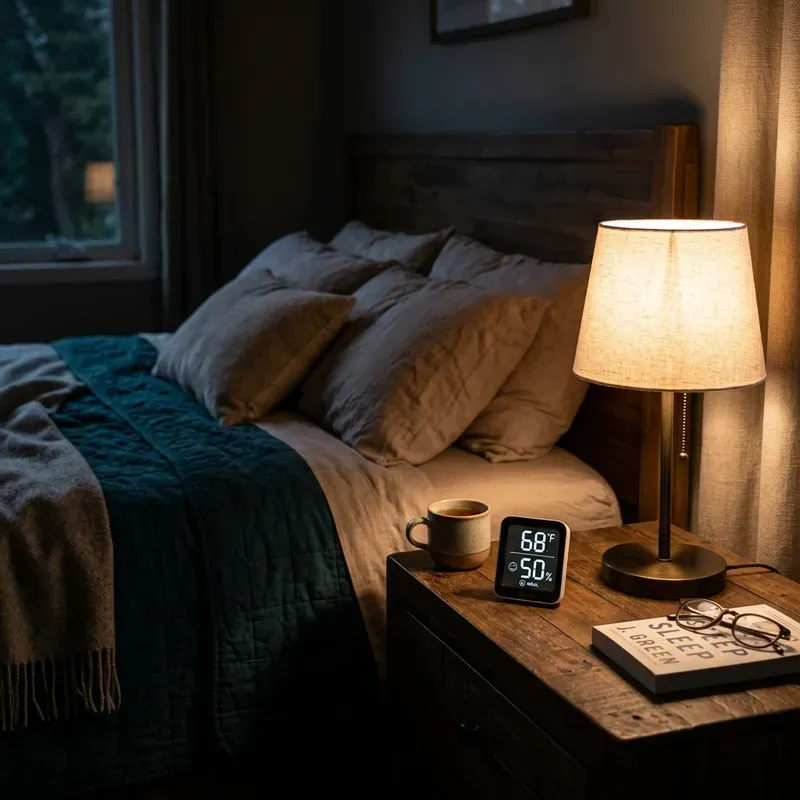
Best bedroom humidity range
Many people sleep comfortably around 40% to 50% relative humidity. In winter, cold windows may force a lower target. Comfort is not the only signal: wet glass, musty odors, and damp bedding mean humidity is too high for that room.
Bedroom humidity table
| Reading | What it may mean | What to do |
|---|---|---|
| Below 30% | Dry air likely | Use a clean humidifier cautiously |
| 35% to 50% | Normal comfort range | Watch windows in winter |
| 50% to 60% | May be okay, but monitor | Ventilate if odors or condensation appear |
| Above 60% | Moisture risk rises | Reduce moisture, ventilate, dehumidify |
Winter bedroom humidity
People often add humidifiers because heated air feels dry. That can help, but bedrooms also collect moisture overnight. If windows sweat by morning, reduce the humidifier and improve airflow near the glass.
How to adjust safely
- Place the hygrometer away from the humidifier and window.
- Clean humidifiers often and follow manufacturer directions.
- Use bathroom fans and kitchen fans to keep apartment moisture lower overall.
- Use a dehumidifier or AC if summer bedroom humidity stays high.
Mistakes to avoid
- Running a humidifier because the room feels cold. Drafts and cold surfaces can mimic dryness.
- Ignoring condensation behind curtains.
- Putting the hygrometer on a windowsill.
- Using fragrance to cover musty odors.
My experience with bedroom humidity
I used to wake up with dry sinuses every winter and assumed I needed a bigger humidifier. A $12 hygrometer showed the room was already at 48% while the windows were sweating. The problem was not dry air; it was moist air hitting cold glass. I lowered the humidifier, cracked the door during the day, and the condensation stopped within two nights.
Now I treat the bedroom differently from the living room. I measure at pillow height, not on the windowsill, and I adjust in small steps instead of chasing how the air feels.
FAQ
Is 50% humidity good for sleeping?
Often yes, but if windows sweat in winter, lower the target.
Is 60% bedroom humidity too high?
Repeated readings near or above 60% should be corrected, especially with condensation or musty odors.
Can low humidity affect sleep?
Dry air can irritate some people, but measure before adding moisture.
Where should I put a bedroom hygrometer?
At breathing height away from windows, vents, sun, and humidifiers.
Should I sleep with a humidifier on?
Only if readings are low and the humidifier is clean. Stop if condensation appears.
Practical moisture checks before you buy anything
Humidity problems are easiest to solve when you separate three questions: where moisture is coming from, whether air is moving enough, and whether cold surfaces are causing condensation. A room can feel damp because of shower steam, cooking, drying laundry indoors, a hidden leak, poor exhaust, or simply because outdoor air is humid. Buying a device before checking those basics can hide the problem without solving it.
| Check | Why it matters | Low-risk first move |
|---|---|---|
| Hygrometer reading | Comfort can be misleading without a number | Measure the room for a full day |
| Window condensation | Cold glass can reveal excess indoor moisture | Improve airflow and check humidity |
| Bathroom or kitchen exhaust | Moisture needs a way out | Run fans longer after showers or cooking |
| Musty closets or corners | Stagnant air and cold surfaces can raise mold risk | Move items away from exterior walls |
Renter note
Renters should avoid covering mold, sealing wet materials, or ignoring leaks. Use a hygrometer, take photos of condensation or staining, and report persistent dampness in writing. Temporary comfort fixes are useful, but leaks, visible growth, or repeated wet surfaces need maintenance.
When not to DIY
Do not treat visible mold, soft drywall, electrical moisture, sewage smells, or recurring leaks as normal humidity. Those are building or safety issues and should be handled by qualified help.
Field notes: Bedroom Humidity: What Level Is Best for Sleep?
This section adds the decision detail most short guides skip: what to measure, what to try first in a real flat, and when to stop and escalate. It is written for apartments and rentals where permanent renovation is not an option.
Humidity control by measurement, not by product ads
Buy a basic hygrometer and log morning/evening RH for three days before you buy equipment. Many “musty flat” complaints are showers without fan time, indoor drying, or a dehumidifier fighting open humid windows.
Target bands: roughly 40–50% RH is comfortable for many homes; above ~60% mold risk rises on cold surfaces; below ~30% nasal irritation is common in winter heating. Numbers beat vibes.
| Reading | Likely story | First move |
|---|---|---|
| <30% | Over-dry winter air | Shorter hot showers; careful humidifier use |
| 40–50% | Usually fine | Maintain exhaust habits |
| >60% | Moisture source + cold surfaces | Find source; closed-room dehumidifier |
Never paint over active mold and call it solved. Small hard-surface spots can be cleaned carefully; large areas, soft porous materials, or recurring growth after cleaning need landlord/pro help.
Lease-safe boundaries
Photograph anything you change. Prefer screw-free or fully reversible products on painted surfaces. Ask in writing before altering entry doors, fire doors, or shared building components. Stop for gas smells, electrical faults, active leaks, or large mold — those are not DIY content problems.
When this page is not enough
If symptoms stay extreme after basic checks — room far outside the rest of the home, water damage, combustion appliance concerns, breaker trips — document conditions and contact a qualified professional or building management. Dwell Calm is informational, not a substitute for HVAC, electrical, mold, or legal advice.
Sleep RH target
Many people sleep best roughly mid-40s% RH, but comfort bands vary. Track three nights with a hygrometer before buying a humidifier that can overshoot and feed condensation on cold glass.
Extra practical detail: bedroom humidity
Treat this guide as a field procedure: observe, change one thing, wait, and record outdoor conditions. If the whole flat fails the same way, escalate to building maintenance with measurements. If only one room fails, stay local — drafts, glass, vents, or moisture at that room’s surfaces.
Keep fixes reversible in rentals. Stop for gas, electrical, flooding, or large mold issues and get qualified help.
Follow-up checks
Revisit this problem after weather changes. A fix that works on a calm day may fail on a windy night. Keep a short note of what you installed and when you removed seasonal products.
If you email support or your landlord, include the room, the symptom time of day, and one photo. Clear packets get faster answers.
Related guides
 Blackout Curtains vs Window Film: Which Helps More?Compare blackout curtains and window film for cold rooms, hot rooms, privacy, drafts, sunlight, renters, and c...
 Cold Room Checklist: 17 Things to Check Before You Spend MoneyA room-by-room checklist for cold rooms in house problems, including airflow, drafts, insulation clues, vents,...
 Condensation on Windows: When It's Normal and When It's a ProblemUnderstand the causes of window condensation, health risks, and practical solutions for moisture control.
 Dehumidifier vs Fan vs Open Window: What Actually Lowers Room Humidity?Compare dehumidifiers, fans, and opening windows for damp rooms, stuffy apartments, window condensation, and b...
Sources
About Emma Collins
Home comfort editor and home wellness advocate with 10 years helping families create calm, functional spaces. Emma created Dwell Calm to share practical, renter-friendly home comfort advice.
Learn more about Emma ->