Drafts & Windows
Thermal Curtains vs Window Film: Which Is Better for Cold Rooms?

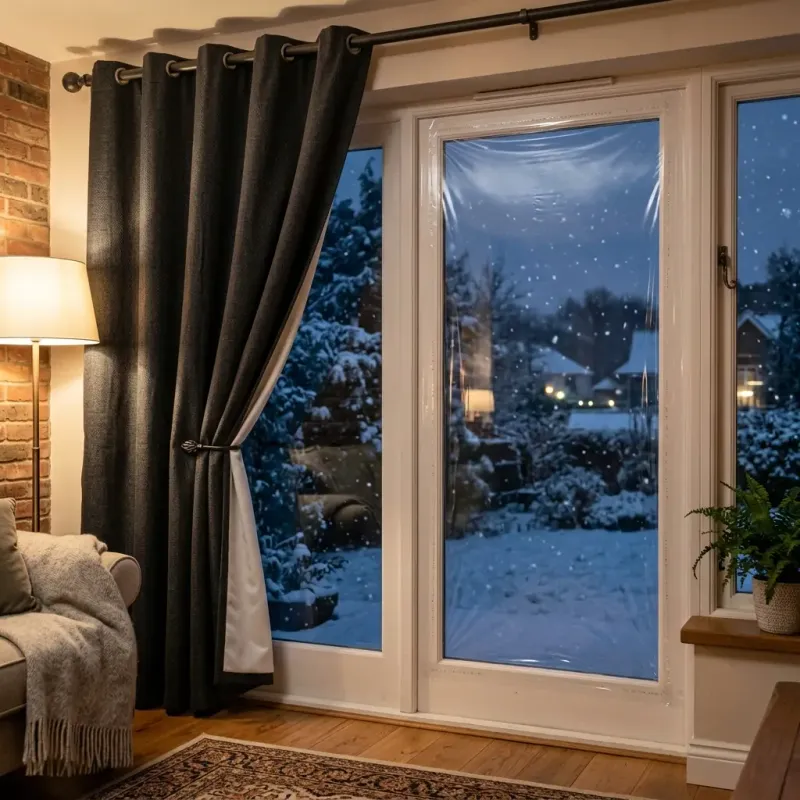
Both can help, but they solve different parts of the window comfort problem. The right choice depends on whether you are fighting air leaks, cold glass, sun heat, privacy, or rental limits.
Key takeaways
- Thermal curtains help most with comfort near cold glass and privacy.
- Temporary window insulation film helps most when the window opening leaks air.
- Solar-control film is a summer glare and heat tool, not the same as winter plastic film.
- For cold rooms, seal moving air first; then add curtains for comfort.
I tested curtains and film side by side over two winters
I tested thermal curtains and window film in the same bedroom during two consecutive winters. The first winter I used thermal curtains alone — they helped but the window still felt cold. The second winter I applied window film and kept the curtains. The combination raised the surface temperature of the glass from 42 °F to 58 °F. I also discovered that cheap thermal curtains sometimes add more bulk than insulation; the lining quality matters more than the fabric weight.
Comparison snapshot
Main comparison table
| Feature | Thermal curtains | Window film | Best choice |
|---|---|---|---|
| Winter comfort | Creates a warmer room-side layer when closed | Plastic film can reduce air leakage | Both, if windows leak and glass feels cold |
| Summer heat | Blocks sun if closed early | Solar film can reduce solar gain and glare | Window film for sunny rooms |
| Renters | Tension rods can be removable | Temporary film is removable; permanent film may not be | Depends on lease |
| Privacy | Strong | Varies by film type | Thermal curtains |
| Condensation | Can trap cold air near glass if sealed poorly | May help surface temperature but not humidity source | Control humidity first |
Best option for winter
If the window leaks air, start with temporary insulation film or weatherstripping. If the glass is cold but not leaking, thermal curtains make the room feel better at night. The Department of Energy notes that curtains and shades can be closed at night to reduce cold drafts and opened during sunny winter days for heat gain.
Best option for summer
Solar-control film is usually stronger for intense sun, glare, and overheating. Curtains still help, but only if closed before the sun has already heated the room.
Best option for renters
Choose products that remove cleanly: temporary plastic film, tension rods, freestanding curtain hardware, and non-damaging draft blockers. Ask before using permanent adhesive film.
Best option for privacy
Curtains win because they fully block views when closed. Privacy film can help during daylight, but many films are less private at night when indoor lights are on.
Dwell Calm tip
If you feel moving air, curtains are the second fix, not the first. Stop the leak with weatherstripping, rope caulk, or temporary film before judging whether fabric helped.
Cost comparison
Plastic insulation film is often the cheapest seasonal fix. Thermal curtains cost more upfront but can be reused for years and improve privacy and light control. Permanent films vary widely in cost and may require careful installation to avoid bubbles or glass stress.
Installation difficulty
Plastic film requires clean frames and patient shrinking with a hair dryer. Curtains require correct width, length, and mounting. A curtain that is too narrow or hung too far from the wall leaks air around the edges and performs worse.
Pros and cons of thermal curtains
- Pros: privacy, reusable, simple, good night comfort.
- Cons: can block daylight, may trap condensation at cold glass, less effective if air leaks are not sealed.
Pros and cons of window film
- Pros: seals seasonal leaks or reduces solar heat depending on film type, keeps window area clear, low visual bulk.
- Cons: installation quality matters, some films are not renter-safe, wrong product may solve the wrong problem.
Can you use both?
Yes. For a cold room, seal the moving air first, then add curtains for comfort. If humidity is high, monitor condensation because curtains can hide wet glass. Pair this guide with Normal Room Humidity if windows sweat.
Common mistakes
- Buying solar film when the real issue is winter air leakage.
- Using curtains that are too short or too narrow.
- Keeping curtains closed on sunny winter days when sunlight could warm the room.
- Ignoring wet windows behind closed curtains.
FAQ
Are thermal curtains or window film better for winter?
Thermal curtains are usually better for nighttime comfort near cold glass, while plastic insulation film is better when the goal is sealing seasonal leaks around the whole window opening.
Are thermal curtains or window film better for summer?
Solar-control window film can be better for sun heat and glare. Curtains help if they are closed before the room heats up.
Can I use both?
Yes. Film can reduce leakage or solar gain, while curtains add a comfort layer and privacy. The combination is often better than either alone.
Which is better for renters?
Temporary plastic film and tension-rod curtains are renter-friendly. Permanent adhesive films and drilled curtain hardware may need permission.
Will window film stop condensation?
Not always. Film can warm the interior surface in some setups, but high indoor humidity and cold windows still need humidity control.
Field notes: Thermal Curtains vs Window Film: Which Is Better for Cold Rooms?
This section adds the decision detail most short guides skip: what to measure, what to try first in a real flat, and when to stop and escalate. It is written for apartments and rentals where permanent renovation is not an option.
Draft testing protocol that avoids wasted seals
Do this on a windy day with heating on: darken the room, look for light under doors, then walk the frame with the back of your hand or a stick of incense. Mark only the spots that move air. Sealing “everything” without a map creates sticky windows and higher condensation without fixing the leak that actually freezes your ankles.
For rentals, prefer removable products first: door sweeps, V-seal, rope caulk, outlet gaskets. Photograph the before state for move-out. If a product fights the sash or latch, remove it the same day — a jammed window is worse than a small draft.
| Location | First reversible fix | Escalate when |
|---|---|---|
| Door bottom | Sweep / slide-on seal | Warped door / fire door rules |
| Window sash | V-seal / foam (correct thickness) | Rot, failed IGU, water intrusion |
| Exterior-wall outlets | Foam gasket (power off) | Sparks, warm plates, aluminum wiring concerns |
| Letterbox / hatch | Brush flap / weather seal | Building forbids alterations |
Lease-safe boundaries
Photograph anything you change. Prefer screw-free or fully reversible products on painted surfaces. Ask in writing before altering entry doors, fire doors, or shared building components. Stop for gas smells, electrical faults, active leaks, or large mold — those are not DIY content problems.
When this page is not enough
If symptoms stay extreme after basic checks — room far outside the rest of the home, water damage, combustion appliance concerns, breaker trips — document conditions and contact a qualified professional or building management. Dwell Calm is informational, not a substitute for HVAC, electrical, mold, or legal advice.
Use both roles
Curtains for nightly cover and radiant comfort. Film for drafty singles in winter. Remove film in summer if it traps heat oddly in your climate.
Related guides
 Stuffy Room? Signs of Stagnant Air and Poor VentilationA stuffy room often points to poor air distribution, weak return airflow or pressure imbalance. Learn the warn...
 Smart Thermostats for Renters: Are They Worth It Without Permanent Changes?A renter-focused guide to smart thermostats, portable sensors, landlord permission, apartment thermostats, and...
 Smart Thermostats for Renters: What Actually Works Without PermissionThinking about a smart thermostat in a rental? Learn which models work without permission, when a C-wire matte...
 How to Survive Summer in an Apartment Without ACNeed to cool an apartment without AC? Learn what actually works during hot weather: daytime heat blocking, nig...
Sources
About Emma Collins
Home comfort editor and home wellness advocate with 10 years helping families create calm, functional spaces. Emma created Dwell Calm to share practical, renter-friendly home comfort advice.
Learn more about Emma ->