Cooling & Airflow
How to Survive Summer in an Apartment Without AC

Need to cool an apartment without AC? Learn what actually works during hot weather: daytime heat blocking, nighttime flushing, fan placement, humidity control and renter-friendly cooling tactics.
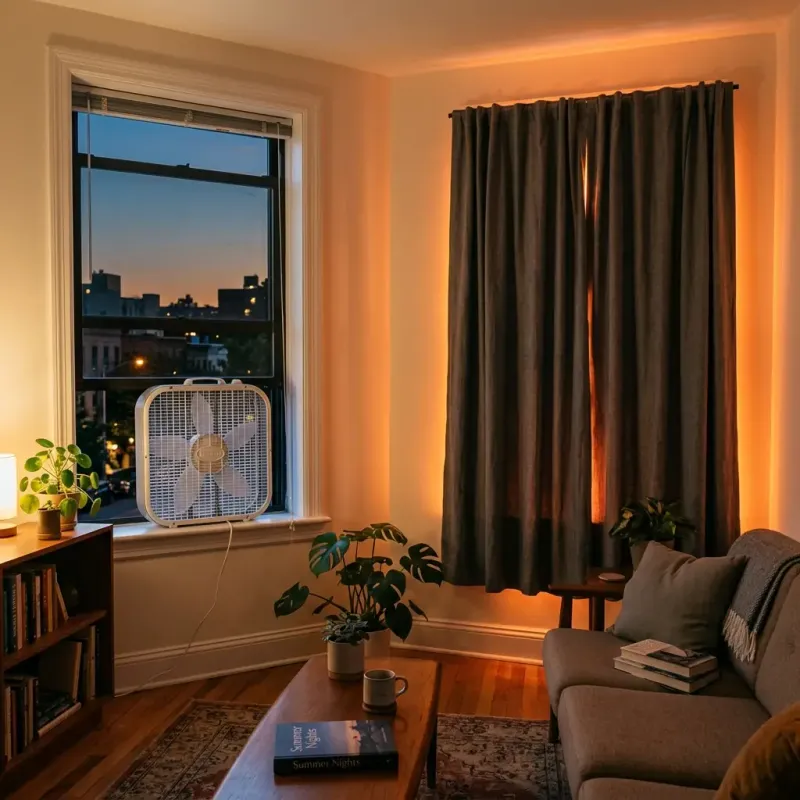
Key takeaways
- Start with the symptom you can observe instead of buying a product first.
- Measure or compare the room when possible: temperature, humidity, airflow, or visible drafts.
- Use reversible, low-cost fixes first if you rent or are not sure what is causing the problem.
- Call a qualified professional for persistent HVAC, mold, electrical, structural, or moisture problems.
What to check first
- Write down when the problem happens: morning, afternoon, night, rainy days, heating cycles, or cooling cycles.
- Compare the affected room with a nearby comfortable room.
- Check windows, doors, vents, fans, humidity readings, and obvious moisture or safety signs.
- Try one low-risk change at a time so you know what actually helped.
Dwell Calm tip
If the issue changes when a door is open, a fan runs, curtains are closed, or weather changes, the cause is probably airflow, surface temperature, humidity, or drafts rather than one single product failure.
When to get help
Get professional help if you see mold growth, repeated condensation that does not improve, electrical issues, combustion-appliance concerns, damaged ducts, water leaks, or a room that remains far outside the rest of the home after basic checks.
Practical airflow checks before adding cooling
A hot or stuffy room is not always short on cooling equipment. It may have blocked supply air, no return path, too much sun, poor fan placement, a portable AC vent leak, or a door that traps warm air. Check airflow and heat gain before buying a larger unit.
| Check | Why it matters | Low-risk first move |
|---|---|---|
| Door open vs closed | Shows whether return airflow is restricted | Compare temperature after a cooling cycle |
| Vent strength | Weak supply air can make one room lag | Clear furniture and check filter |
| Sun exposure | Glass can add heat faster than AC removes it | Close curtains before direct sun hits |
| Fan direction | Fans can mix air or move heat the wrong way | Place fans to move air toward an exit path |
Renter note
Renters should focus on reversible airflow changes: clear vents, adjust curtains, improve fan placement, seal portable AC panels, and document large temperature gaps. Avoid wiring, duct, or window modifications without permission.
When not to DIY
Call for help if the system short cycles, vents have almost no airflow, breakers trip, ducts are damaged, or the room remains far hotter than nearby rooms after basic checks.
A simple decision path
Use this order when a room is hot or stuffy. First, decide whether the room is gaining too much heat or receiving too little cool air. Afternoon heat often points to sun exposure, roof heat, or west-facing glass. A room that changes when the door opens often points to return-air problems. Weak vent airflow points toward filter, register, duct, or balance issues.
Second, test the cheapest variables: curtains before sun hits the window, clear vents, door open versus closed, fan location, and whether a portable AC hose or window panel leaks hot air back into the room. Third, only then compare equipment. A larger AC cannot fully overcome bad venting, direct sun all day, or no return path.
What a useful fix should change
A good cooling or airflow fix should reduce the temperature gap, make the room recover faster after sun exposure, reduce stale air with the door closed, or make the AC cycle less constantly. If the room stays far outside the rest of the home, the issue may be ducts, insulation, attic heat, or equipment capacity.
Before you move on
Make one change at a time and give the room enough time to respond. If you seal a draft, move a fan, change curtain habits, or adjust ventilation all at once, it becomes hard to know which step actually helped. Take a quick note of the room condition before and after: temperature, humidity, time of day, weather, and whether doors or windows were open.
This simple record is useful for two reasons. It prevents wasted purchases, and it gives you better evidence if the problem needs a landlord, HVAC technician, electrician, insulation contractor, or mold professional. Comfort problems are easier to solve when the pattern is clear.
Related guides
 How to Make a Room Less Stuffy: Practical Airflow FixesHow to fix a stuffy room, stagnant air, poor ventilation, and stale bedrooms with fans, vents, exhaust, door g...
 How to Find Drafts in a House: Step-by-Step Checks That Actually WorkTrying to find drafts in your house? Use simple tests, thermal clues and a practical draft detector checklist ...
 Poor Ventilation in an Apartment? How to Fix a Stuffy Room for RealPoor ventilation in an apartment can make rooms feel stuffy, humid and stale. Learn how to diagnose stagnant a...
 How to Improve Thermal Comfort Without Major RenovationsEffective strategies that don't require landlord permission or large investments to keep your home at the idea...
FAQ
How do I keep heat out before it builds up?
Close effective window coverings before direct sun hits, limit indoor heat sources, and ventilate only when outdoor air is cooler or drier.
Should I run fans all day?
Run fans when they help people feel cooler or move cooler air. Turn them off in empty rooms because they do not lower air temperature.
When is summer heat a safety issue?
If indoor temperatures stay dangerously high, sleep is impossible, or vulnerable people are affected, seek a cooled space or proper cooling support.