Smart Thermostats for Renters: Are They Worth It Without Permanent Changes?

A renter-focused guide to smart thermostats, portable sensors, landlord permission, apartment thermostats, and non-permanent ways to improve comfort.
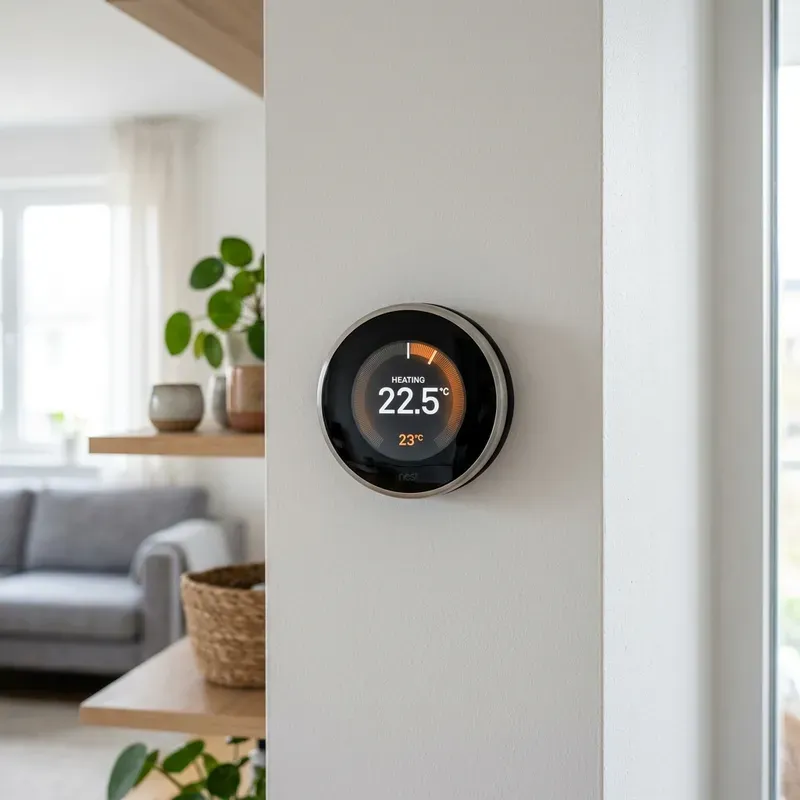
Key takeaways
- A smart thermostat will not fix drafts, poor airflow, bad insulation, or a broken heating system.
- Renters need permission, wiring compatibility, and a plan to restore the original setup.
- Portable sensors and better schedules may help without permanent changes.
- Document comfort problems before changing controls.
Use this renter-first check before buying a thermostat. The main questions are permission, wiring compatibility, whether you control the system, and whether scheduling would solve the actual comfort problem.
Quick diagnosis table
| Symptom | Likely cause | First thing to check | Best first fix |
|---|---|---|---|
| You control a standard thermostat | Maybe worth it | Need permission and compatibility | Ask landlord first |
| Building has central control | Usually not useful | You cannot control system | Use room-level fixes |
| No permanent changes allowed | Skip installation | Deposit risk | Use sensors and routines |
| Uneven rooms | Thermostat may not solve it | Airflow or draft issue | Fix room causes first |
Step-by-step checks
Permission comes first
Do not replace a thermostat in a rental without written permission. Some systems are line-voltage, proprietary, or connected to building controls.
Ask before changing anything attached to the wall system. Keep photos of the original setup and written approval if the landlord allows a temporary swap.
Compatibility matters
Smart thermostats often need specific wiring and power. A bad install can damage equipment or violate lease rules.
Do not guess on wiring. Line-voltage heat, proprietary apartment systems, and shared HVAC controls can make a standard smart thermostat unsafe or unsuitable.
What renters can use instead
Use a hygrometer, room thermometer, smart plugs for fans, scheduled curtains, door draft stoppers, and better airflow. These often solve the actual issue.
Room thermometers, hygrometers, fan timers, curtain routines, draft stoppers, and maintenance documentation often solve more than a thermostat in apartments.
When a thermostat helps
It can help if you control your own forced-air system, have permission, and mainly need scheduling. It does not fix drafty windows or weak vents.
It helps most when you have your own compatible system and the main issue is schedule control. It will not repair weak airflow, bad insulation, or a sun-baked room.
Low-cost fixes to try first
Use the least permanent fix that addresses the confirmed cause. That usually means clearing vents, sealing a specific draft, using curtains or window film, adjusting fan placement, measuring humidity, or documenting a maintenance issue. Avoid buying several products at once because you will not know which one helped.
Renter-friendly fixes
Good renter options include removable weatherstripping, rope caulk, window film, door draft stoppers, plug-in hygrometers, portable fans, rugs, curtain liners, and written maintenance requests. Keep receipts and photos, and avoid screws, permanent caulk, wiring changes, or anything that could affect the deposit unless the landlord approves it.
When to call a professional
Call a qualified professional or property manager if you see mold, water stains, electrical heat, broken windows, no HVAC airflow, unsafe heat, combustion appliance concerns, or a room that stays far outside the rest of the home after basic checks.
Mistakes to avoid
- Do not hide leaks, condensation, or mold with decor.
- Do not block supply or return vents.
- Do not caulk moving window parts shut.
- Do not use permanent fixes in a rental without permission.
FAQ
Should renters bother with smart thermostats?
Only if allowed, compatible, and reversible.
Can I install a smart thermostat in an apartment?
Maybe, but you need permission and system compatibility.
What if I cannot make permanent changes?
Use sensors, curtains, fans, weatherstripping, and routines.
Will a smart thermostat fix a cold bedroom?
Usually no. Cold bedrooms are often airflow, draft, or insulation problems.
Are smart thermostats useful in multifamily rentals?
Sometimes, but building rules and HVAC design matter.
Field notes: Smart Thermostats for Renters: Are They Worth It Without Permanent Changes?
This section adds the decision detail most short guides skip: what to measure, what to try first in a real flat, and when to stop and escalate. It is written for apartments and rentals where permanent renovation is not an option.
Warmth without guessing
Separate three problems: moving cold air (drafts), cold surfaces (glass/floor), and weak heat delivery (blocked radiators/vents). Raising the thermostat cannot fix a blocked panel or a tilted window left open all winter.
Measure at seating height in the room center, same time for three days. Compare to the hallway. A large gap with a hot radiator means loss elsewhere; a lukewarm radiator means delivery/balance/air issues.
| Symptom | Check first | Renter-safe move |
|---|---|---|
| Cold ankles, warm chest | Door/window drafts | Sweep + weatherstrip tests |
| Hot panel, cold room | Furniture/curtains blocking | Clear 10–15 cm face |
| Cold top of radiator | Trapped air | Bleed only if allowed |
| Cold floor | Uninsulated slab/crawl | Rug + pad |
Lease-safe boundaries
Photograph anything you change. Prefer screw-free or fully reversible products on painted surfaces. Ask in writing before altering entry doors, fire doors, or shared building components. Stop for gas smells, electrical faults, active leaks, or large mold — those are not DIY content problems.
When this page is not enough
If symptoms stay extreme after basic checks — room far outside the rest of the home, water damage, combustion appliance concerns, breaker trips — document conditions and contact a qualified professional or building management. Dwell Calm is informational, not a substitute for HVAC, electrical, mold, or legal advice.
Permission-first path
Ask in writing before touching base wiring. Portable sensors and plug-in smart plugs for space heaters (used safely) often beat a full thermostat swap in rentals. Never bypass safety cutoffs.
Renter thermostat reality
Wiring changes need permission. Sensors and behavioral schedules often deliver most of the value. Never defeat safety devices to force compatibility.
Follow-up checks
Revisit this problem after weather changes. A fix that works on a calm day may fail on a windy night. Keep a short note of what you installed and when you removed seasonal products.
If you email support or your landlord, include the room, the symptom time of day, and one photo. Clear packets get faster answers.
Follow-up checks
Revisit this problem after weather changes. A fix that works on a calm day may fail on a windy night. Keep a short note of what you installed and when you removed seasonal products.
If you email support or your landlord, include the room, the symptom time of day, and one photo. Clear packets get faster answers.
More detail you can use today
Permission before wiring. Sensors and schedules often deliver most value without permanent changes.
If a product fights your windows, doors, or lease rules, remove it. A stuck sash or scraped fire door is a worse outcome than a small leftover draft. Prefer reversible kits and keep packaging until you know the fix earned its keep.
When comfort finally stabilizes, stop adding layers. Extra gadgets after the problem is solved mostly add clutter and energy use.
Share what worked with your household so people do not reopen tilted windows or block the radiator you just cleared. Consistency keeps the win.
Related guides
 How to Make a Room Less Stuffy: Practical Airflow FixesHow to fix a stuffy room, stagnant air, poor ventilation, and stale bedrooms with fans, vents, exhaust, door g...
 How to Improve Thermal Comfort Without Major RenovationsEffective strategies that don't require landlord permission or large investments to keep your home at the idea...
Sources
About Emma Collins
Home comfort editor and home wellness advocate with 10 years helping families create calm, functional spaces. Emma created Dwell Calm to share practical, renter-friendly home comfort advice.
Learn more about Emma ->