Drafts & Windows
Drafts Around Outlets and Baseboards: How to Find and Fix Hidden Air Leaks

Learn why cold air comes from outlets, switches, baseboards, and trim, plus safe renter-friendly ways to reduce drafts.
Key takeaways
- Cold outlets are most common on exterior walls and rooms over garages or crawl spaces.
- Foam outlet gaskets can reduce small leaks, but they do not fix large wall or floor gaps.
- Baseboard drafts often come from gaps behind trim or where floors meet exterior walls.
- Electrical boxes are not places for guesswork; call a pro if anything is loose, wet, scorched, or unsafe.
Draft location table
| Symptom | Likely cause | Safe first check | Easy fix | Call a pro when |
|---|---|---|---|---|
| Cold air from outlet cover | Air moving through wall cavity | Hold tissue near cover plate | Install foam gasket behind cover | Outlet is loose, warm, wet, or discolored |
| Cold line along baseboard | Gap behind trim or floor edge | Hand or tissue test along trim | Paintable caulk for fixed gaps | Gap is large, damp, or connected to rot |
| Cold corner near exterior wall | Insulation or air sealing weakness | Compare wall and floor temperature | Rug, curtains, small sealing fixes | Large cold area persists |
Safe tests
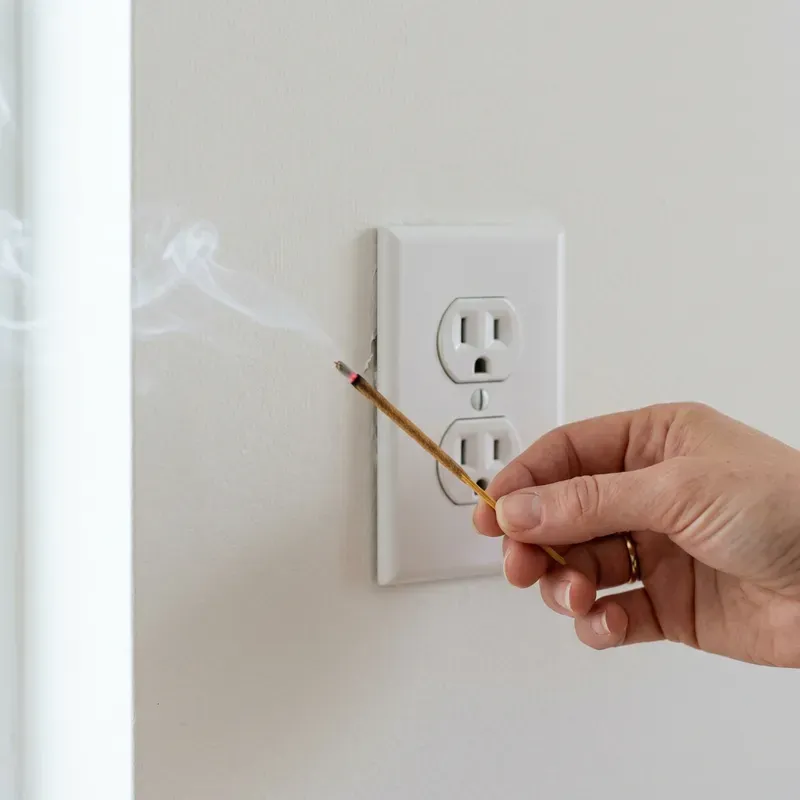
Use a tissue or incense only on de-energized outlet covers when you are checking for air movement. Never stick tools into slots. For baseboards, run your hand along the trim on a cold day.
Mark the exact spot where air moves. A draft at an outlet is often wall-cavity air, not a window problem.
Outlet drafts
Exterior-wall outlets can leak because the electrical box sits in a hole through the drywall. Foam gasket kits behind cover plates cost a few dollars and take minutes per outlet.
In my kitchen, three outlet gaskets stopped the cold puff I felt every time the wind picked up. The fix was under $10 total.
Baseboard drafts
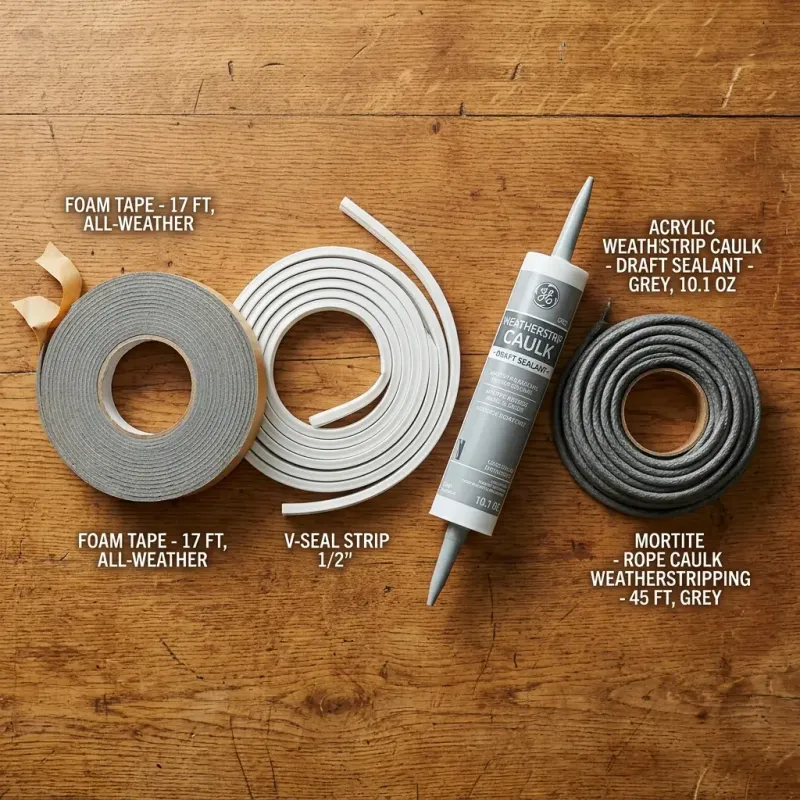
Gaps between trim and flooring let cold air slide along the floor edge. Clear caulk works on fixed joints; removable rope caulk helps in rentals where landlords allow minor sealing.
Pair baseboard sealing with a rug if the floor still feels cold. The draft and the cold surface are related but not identical problems.
Renter-friendly fixes
- Outlet foam gaskets.
- Rope caulk on fixed trim gaps.
- Draft stoppers along exterior doors.
- Document persistent cold walls for maintenance.
FAQ
Are outlet drafts dangerous?
Air leaks are usually a comfort issue. Warm, buzzing, or discolored outlets need an electrician.
Should I caulk all baseboard gaps?
Seal fixed gaps only. Leave expansion joints at flooring transitions alone.
Do outlet drafts mean bad insulation?
Often it is air moving through the wall cavity rather than missing batt insulation behind the outlet.
Practical next steps
Test one change at a time and give the room a few hours before judging results. Note outdoor weather, time of day, and whether doors or windows were open. That simple record prevents wasted purchases and gives clearer information if you need a landlord or technician.
Prefer reversible, lease-safe fixes first. Stop and get qualified help for gas smells, electrical faults, active leaks, large mold areas, or equipment that should not be opened by tenants.
For related checks, use the draft, humidity, and room-diagnosis guides on Dwell Calm rather than stacking random gadgets in the same afternoon.
Field notes: Drafts Around Outlets and Baseboards: How to Find and Fix Hidden Air Leaks
This section adds the decision detail most short guides skip: what to measure, what to try first in a real flat, and when to stop and escalate. It is written for apartments and rentals where permanent renovation is not an option.
Draft testing protocol that avoids wasted seals
Do this on a windy day with heating on: darken the room, look for light under doors, then walk the frame with the back of your hand or a stick of incense. Mark only the spots that move air. Sealing “everything” without a map creates sticky windows and higher condensation without fixing the leak that actually freezes your ankles.
For rentals, prefer removable products first: door sweeps, V-seal, rope caulk, outlet gaskets. Photograph the before state for move-out. If a product fights the sash or latch, remove it the same day — a jammed window is worse than a small draft.
| Location | First reversible fix | Escalate when |
|---|---|---|
| Door bottom | Sweep / slide-on seal | Warped door / fire door rules |
| Window sash | V-seal / foam (correct thickness) | Rot, failed IGU, water intrusion |
| Exterior-wall outlets | Foam gasket (power off) | Sparks, warm plates, aluminum wiring concerns |
| Letterbox / hatch | Brush flap / weather seal | Building forbids alterations |
Lease-safe boundaries
Photograph anything you change. Prefer screw-free or fully reversible products on painted surfaces. Ask in writing before altering entry doors, fire doors, or shared building components. Stop for gas smells, electrical faults, active leaks, or large mold — those are not DIY content problems.
When this page is not enough
If symptoms stay extreme after basic checks — room far outside the rest of the home, water damage, combustion appliance concerns, breaker trips — document conditions and contact a qualified professional or building management. Dwell Calm is informational, not a substitute for HVAC, electrical, mold, or legal advice.
Outlet gasket safety
Breaker off before the cover plate comes off. Foam gasket only — never stuff scrap insulation into the box. If the plate is warm or smells odd, stop and call an electrician.
Hidden draft path
Exterior-wall outlets and baseboard gaps pull cold air at ankle level. Gaskets and careful baseboard sealing help; electrical boxes are not trash bins for insulation scraps.
Follow-up checks
Revisit this problem after weather changes. A fix that works on a calm day may fail on a windy night. Keep a short note of what you installed and when you removed seasonal products.
If you email support or your landlord, include the room, the symptom time of day, and one photo. Clear packets get faster answers.
Follow-up checks
Revisit this problem after weather changes. A fix that works on a calm day may fail on a windy night. Keep a short note of what you installed and when you removed seasonal products.
If you email support or your landlord, include the room, the symptom time of day, and one photo. Clear packets get faster answers.
More detail you can use today
Power off for outlet gaskets. Seal baseboards carefully. Warm plates mean stop and call an electrician.
If a product fights your windows, doors, or lease rules, remove it. A stuck sash or scraped fire door is a worse outcome than a small leftover draft. Prefer reversible kits and keep packaging until you know the fix earned its keep.
When comfort finally stabilizes, stop adding layers. Extra gadgets after the problem is solved mostly add clutter and energy use.
Share what worked with your household so people do not reopen tilted windows or block the radiator you just cleared. Consistency keeps the win.
Related guides
 How to Find Drafts
 Weatherstripping vs Caulk
 Why Is One Room So Cold?
Sources
About Emma Collins
Home comfort editor. Emma writes from rental living, room measurements, and public EPA / ENERGY STAR guidance — not as a licensed contractor, electrician, or medical professional.
Learn more about Emma ->