How to Stop Drafts From Under a Door: 5 Methods Compared

Learn how to stop drafts from under a door with 5 proven methods. Compare brush sweeps, under-door seals, fabric draft stoppers, foam tape, and the towel method.
Key takeaways
- A brush door sweep is the most effective permanent fix and allows the door to still open and close normally.
- Under-door seals mount to the door bottom and create a tight barrier ideal for exterior doors.
- Fabric draft stoppers are the best renter-friendly option since they require no tools and leave no marks.
- Foam tape works for small, consistent gaps but may wear out with frequent door use.
- The towel method is free and works in emergencies but needs adjustment every time you use the door.
How to pick an under-door fix
Paper test first: if a sheet slides under the closed door, there is a gap worth sealing. Brush sweeps stay on the door and still open; fabric stoppers need moving; foam tape compresses on high-traffic doors. Exterior doors with a large, uneven gap usually need a solid bottom seal. Fire doors and building rules can forbid hardware — check before screws.
Test your door gap before buying anything. Slide a piece of paper under the closed door. If it slides through easily, you have a gap worth sealing. The thicker the paper you can fit, the bigger the draft you will get.
Quick method comparison
| Method | Cost | Tools needed | Effectiveness | Renter-friendly | Door opens freely |
|---|---|---|---|---|---|
| Brush door sweep | $10–$20 | Screwdriver | Excellent | Yes (screw holes) | Yes |
| Under-door seal | $12–$25 | Screwdriver or adhesive | Excellent | Varies | Yes |
| Fabric draft stopper | $8–$15 | None | Good | Yes | No (must move) |
| Foam tape adhesive | $5–$10 | Scissors | Fair | Yes | Yes |
| Rolled towel | $0 | None | Fair | Yes | No (must move) |
1. Brush door sweep — best permanent solution
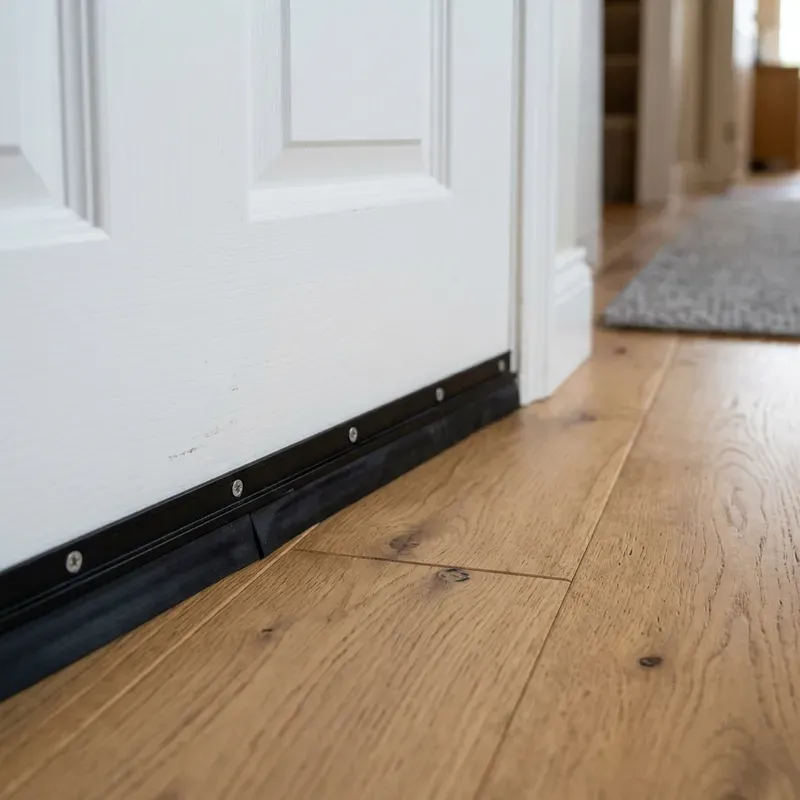
A brush door sweep is a strip with dense nylon bristles that attaches to the bottom of the door. When the door is closed, the bristles contact the floor and block the gap while still allowing the door to swing open and closed. Brush sweeps are available at any hardware store and install with screws in about five minutes.
I installed a brush sweep on my front door and was impressed by how well it worked. The bristles are flexible enough to conform to an uneven floor but dense enough to stop airflow completely. After installation, I held a lighter near the gap and the flame did not flicker at all. The door still opened and closed smoothly. The only drawback is that brush sweeps leave small screw holes in the door, which is worth noting if you are renting.
2. Under-door seal — best for large gaps
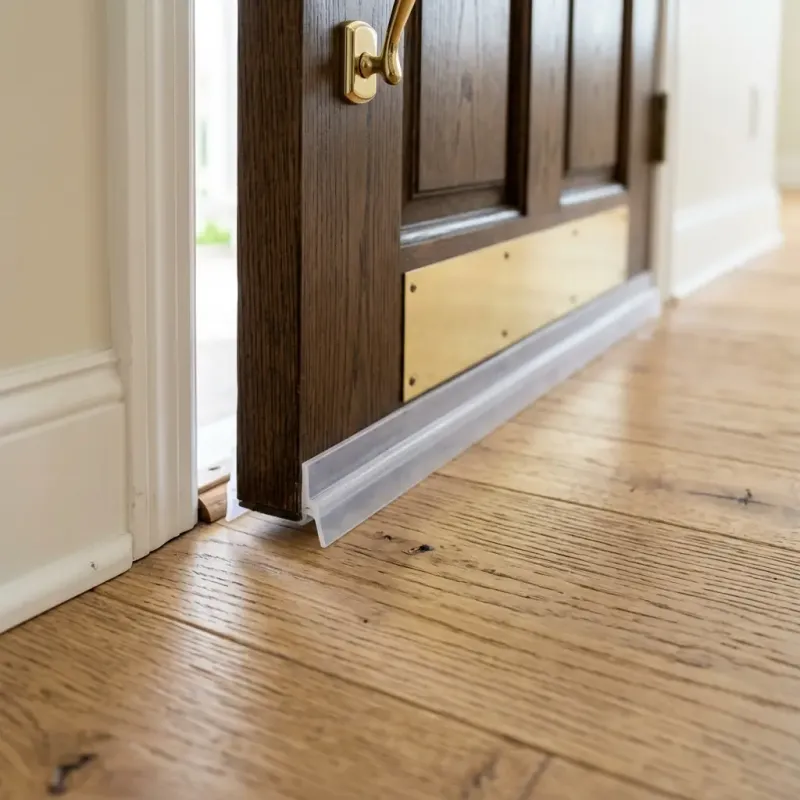
An under-door seal, sometimes called a door bottom seal, is a flat strip of rubber, silicone, or vinyl that attaches to the bottom of the door. Unlike a brush sweep, which uses bristles, a seal uses a solid material that presses against the floor. These are especially effective for large or uneven gaps and are commonly used on exterior doors.
I tested an under-door seal on my back door, which had a quarter-inch gap that was letting in cold air and even small insects. The seal I used had an adhesive backing and required no screws. It installed in about two minutes. The seal pressed firmly against the threshold and blocked the draft completely. For doors with a large or irregular gap, an under-door seal is the most effective option.
3. Fabric draft stopper — best renter-friendly option
A fabric draft stopper is a long tube filled with foam, sand, or fiberfill that you place against the bottom of the door. No tools, no adhesive, no screws. You simply lay it in front of the gap. Draft stoppers are available at most home goods stores and online for $8 to $15.
I used a fabric draft stopper at my apartment bedroom door for several months. It blocked the draft effectively and cost less than $10. The main downside is that you have to move it out of the way every time you open the door, and it can be a tripping hazard if not placed neatly against the door. But for a renter who cannot make permanent changes, a fabric draft stopper is the ideal solution. Some draft stoppers are designed to be placed on both sides of the door and include a flap that slides under the door, which improves effectiveness.
4. Foam weatherstripping tape — best for small gaps
Foam weatherstripping tape is an adhesive-backed foam strip that can be applied to the bottom of the door. It works best for doors with a small, consistent gap of less than 1/8 inch. The tape compresses when the door closes, creating a seal. It costs about $5 to $10 per roll and installs in minutes.
I tested foam tape on an interior door that had a small gap. The tape sealed the gap well initially, but I found that the foam compressed permanently over time and lost effectiveness after a few weeks of regular door use. On a door that is opened and closed many times a day, foam tape is not the most durable option. It works better on doors that are used less frequently, like a pantry or closet door.
5. Towel method — the free emergency fix
The simplest way to stop a draft under a door costs nothing. Roll up a bath towel or two and place them against the gap under the door. The thicker the roll, the better the seal. This method has been used for generations because it works in a pinch.
I used the towel method on a particularly cold night before I had bought any draft-stopping products. I rolled up two towels and placed them at the bottom of the front door. The draft stopped immediately. The drawbacks are obvious: you have to move the towel every time you open the door, it looks messy, and it can shift out of place. But when you need a fix at 10 PM on a freezing night, a towel works. For a longer-term solution, spend the $10 on a fabric draft stopper.
Which method should you choose?
Your choice depends on your situation. If you own your home and want the best permanent fix, install a brush door sweep. If you rent and cannot make permanent changes, a fabric draft stopper is the best balance of effectiveness and convenience. If you have a large gap under an exterior door, an under-door seal is the most effective option. If you need a fix right now and have nothing else, a rolled towel will get you through the night.
For most people, I recommend starting with a fabric draft stopper. It costs under $15, requires no tools, and you will know within seconds whether it solves the problem. If it does, and you find that moving it every time you open the door is annoying, upgrade to a brush sweep or under-door seal.
| Situation | Best method | Why |
|---|---|---|
| Renter, can’t modify door | Fabric draft stopper | No tools, no damage, under $15 |
| Homeowner, exterior door | Brush door sweep | Permanent, effective, allows normal use |
| Large or uneven gap | Under-door seal | Conforms to irregular gaps best |
| Small gap, low-use door | Foam tape | Cheapest adhesive option |
| Emergency fix, nothing else | Rolled towel | Free, works immediately |
FAQ
Sweep fit
Measure twice. A dragging sweep fails early and annoys everyone. Soft seal first for uneven floors.
Related guides
 Door Sweep vs. Door Seal: Which One Should You Use?Compare door sweeps and door seals for drafty doors. Learn the differences, best use cases, installation difficulty, and cost of each option.Door Seals and Sweeps: Complete Guide to Drafty DoorsLearn about door seals, sweeps, weatherstripping, and draft stoppers to stop drafts around doors.
 How to Detect and Fix Drafts in Your HomeA complete guide to finding and fixing drafts in your home using simple tools like incense sticks, lighters, and tissue paper.
 Draft Detector Tests: Find Air Leaks Without Expensive ToolsLearn how to find drafts using simple household items. Test your windows, doors, outlets, and baseboards for air leaks.
Sources
About Emma Collins
Home comfort editor. Emma writes from rental living, room measurements, and public EPA / ENERGY STAR guidance — not as a licensed contractor, electrician, or medical professional.
Learn more about Emma ->