Why Is My Living Room So Cold?
Why a living room feels cold, including drafts, large windows, exterior walls, fireplaces, poor airflow, and practical fixes for renters and homeowners.

Key takeaways
- Living rooms often feel cold because they have more glass, exterior walls, doors, fireplaces, or open space.
- Check large windows, exterior doors, vents, radiators, and floor-level drafts first.
- Curtains help with cold glass, but they do not fix air leaks around frames.
- If the room stays cold after basic checks, compare temperatures and document the pattern.
Use this living-room check to separate cold glass, real air leaks, weak heat delivery, and layout problems before changing the thermostat.
Quick diagnosis table
| Symptom | Likely cause | First thing to check | Best first fix |
|---|---|---|---|
| Cold near sofa | Sofa is near glass or exterior wall | Move it away from cold surface | Add curtains or rug |
| Cold by fireplace | Open damper or leaky fireplace | Check damper position | Close damper when safe |
| Cold floor edge | Baseboard or sill leak | Hand or tissue test | Seal fixed gaps |
| Room never catches up | Weak airflow or undersized run | Compare vent output | HVAC balancing check |
Step-by-step checks
Large rooms lose comfort differently
Living rooms often have big windows, exterior doors, fireplaces, high ceilings, or several exterior surfaces, so they can feel cold even when bedrooms are fine.
Compare seating areas, not just the thermostat reading. A sofa near a cold wall or large window can feel uncomfortable even if the center of the room is close to target temperature.
Check windows and exterior doors
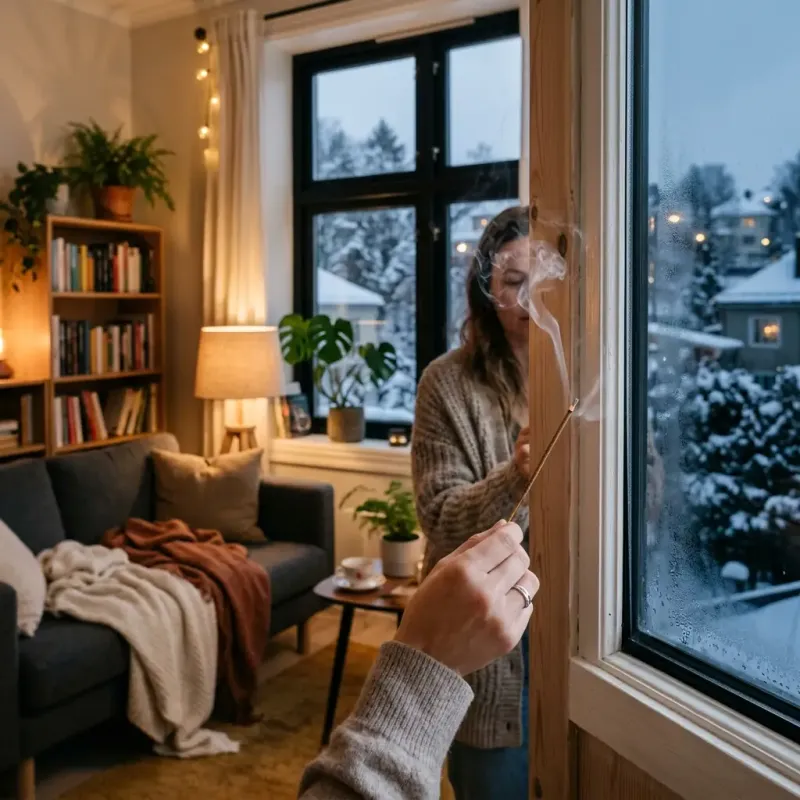
Run your hand along frames, locks, thresholds, and trim. A draft coming through windows or under a door changes comfort quickly because people sit still in living rooms.
Test one edge at a time and note the exact leak: sash, threshold, lock side, trim, or fireplace area. The fix changes depending on the leak path.
Look at furniture and airflow
Bookshelves, couches, curtains, and media cabinets can block registers or returns. Keep vents visible and let air move across the room.
Run the heat with vents clear and doors in their normal position. If airflow improves after moving a couch or lifting a curtain, keep that layout change before buying products.
Use comfort layering before major work
Area rugs, lined curtains, window film, door sweeps, and better seating placement can make a living room warmer without turning up the heat.
Layer fixes by cause: rugs for cold floors, lined curtains for cold glass, door sweeps for bottom gaps, and window film or weatherstripping for confirmed leaks.
Low-cost fixes to try first
Use the least permanent fix that addresses the confirmed cause. That usually means clearing vents, sealing a specific draft, using curtains or window film, adjusting fan placement, measuring humidity, or documenting a maintenance issue. Avoid buying several products at once because you will not know which one helped.
Renter-friendly fixes
Good renter options include removable weatherstripping, rope caulk, window film, door draft stoppers, plug-in hygrometers, portable fans, rugs, curtain liners, and written maintenance requests. Keep receipts and photos, and avoid screws, permanent caulk, wiring changes, or anything that could affect the deposit unless the landlord approves it.
When to call a professional
Call a qualified professional or property manager if you see mold, water stains, electrical heat, broken windows, no HVAC airflow, unsafe heat, combustion appliance concerns, or a room that stays far outside the rest of the home after basic checks.
Mistakes to avoid
- Do not hide leaks, condensation, or mold with decor.
- Do not block supply or return vents.
- Do not caulk moving window parts shut.
- Do not use permanent fixes in a rental without permission.
FAQ
Why is the living room colder than bedrooms?
It may have more windows, exterior walls, doors, or fireplace leakage.
Can a fireplace make the room cold?
Yes, an open or leaky damper can pull warm indoor air out.
Do curtains help a cold living room?
Yes, especially over large windows, but seal obvious drafts first.
Should I move furniture away from vents?
Yes, blocked vents are a common reason for cold rooms.
When is insulation likely?
If walls, floors, and corners stay cold after drafts and airflow are addressed, insulation may need inspection.
Living rooms that feel colder than bedrooms
Large glass, a patio door gap, and a floor over an unheated entry or garage stack. Pull furniture off the exterior wall, add a door sweep, and use thermal curtains at night before raising the heat two degrees for the whole apartment. Measure glass surface vs room air if you have an IR thermometer — cold glass is radiant loss even without a howling draft.
Big glass rooms
Living rooms lose heat through large windows and get drafts at balcony doors. Treat glass and door bottoms before blaming the whole boiler.
Related guides
 Condensation on Windows: When It's Normal and When It's a ProblemUnderstand the causes of window condensation, health risks, and practical solutions for moisture control.
 Dehumidifier vs Fan vs Open Window: What Actually Lowers Room Humidity?Compare dehumidifiers, fans, and opening windows for damp rooms, stuffy apartments, window condensation, and b...Dehumidifier: Windows Open or Closed?Should windows be open or closed when using a dehumidifier? Learn what works for apartments, humid rooms, bath...
 How to Find Drafts in Your House: Simple Tests That Actually WorkFind drafts around windows, doors, outlets, baseboards, attic hatches, and basement areas using simple tests, ...