Apartment Ventilation Guide for Stale, Humid, or Stuffy Rooms
A renter-friendly guide to apartment ventilation, poor ventilation signs, exhaust fans, window airing, humidity, and stale air fixes.
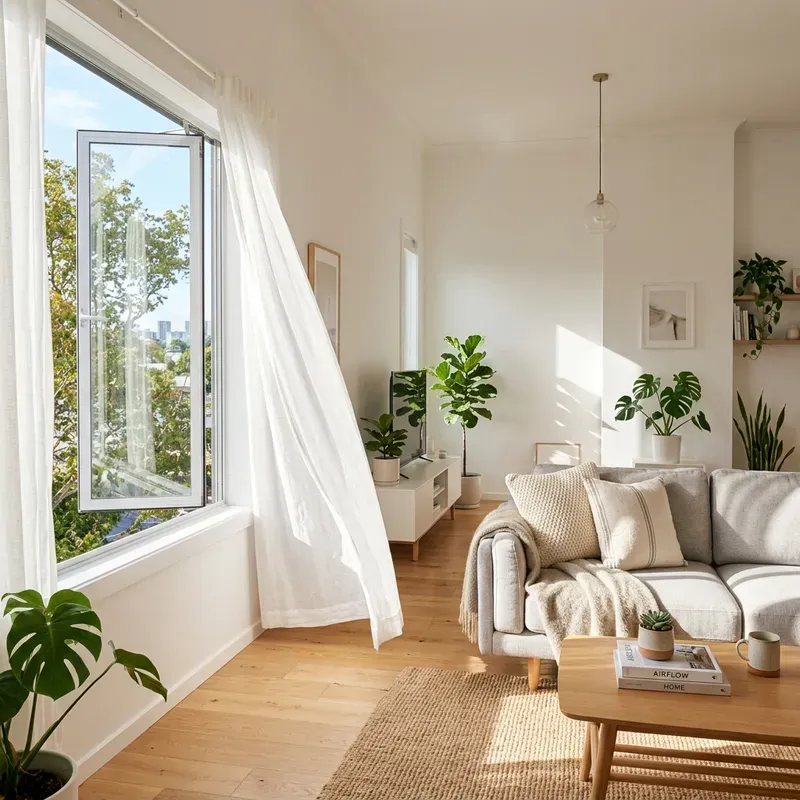
Key takeaways
- Stale apartment air usually needs source control, exhaust, or short planned airing, not just another fan.
- Bathrooms, kitchens, laundry, and closed bedrooms are the first places to check.
- Ventilation should improve odors, humidity, and drying speed without creating unsafe heat or cold.
- Report persistent moisture, visible mold, or broken exhaust fans instead of masking them.
Use this as a room-by-room ventilation check: find where moisture or stale air starts, confirm whether air has a path out, then choose the least permanent fix that matches the cause.
Quick diagnosis table
| Symptom | Likely cause | First thing to check | Best first fix |
|---|---|---|---|
| Bathroom exhaust | Shower moisture | Run fan during and after shower | Keep on 20 minutes |
| Kitchen exhaust | Cooking steam and odors | Use while cooking | Remove humidity at source |
| Cross-ventilation | Mild dry weather | Open opposite windows briefly | Replace stale air |
| Fan transfer | Rooms without windows | Aim toward doorway | Move air to fresher area |
Step-by-step checks
Start at moisture sources
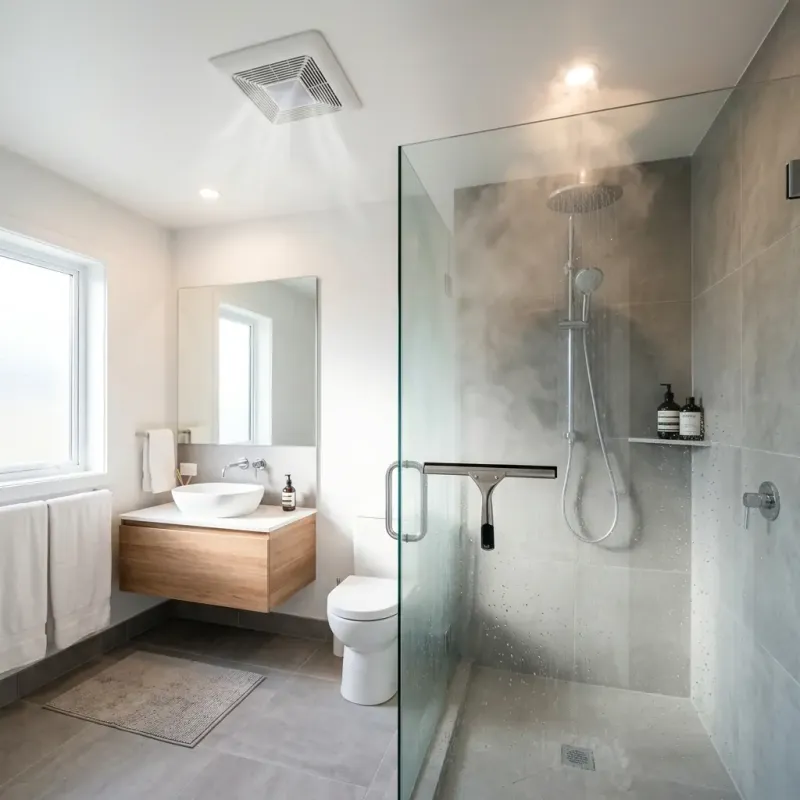
Bathrooms and kitchens create most apartment humidity. Run fans long enough, clean grilles, and report broken exhaust fans. A quiet or weak fan may not be doing much.
After showers or cooking, check whether mirrors clear, odors fade, and humidity drops within a reasonable time. If a fan sounds weak, hold a tissue near the grille and document it for maintenance.
Use windows strategically
Open windows when outdoor air is comfortable and cleaner than indoor air. During humid weather, long open-window periods can make indoor humidity worse.
Short airing works best when outdoor air is cooler, drier, and cleaner than indoor air. In humid weather, long open-window periods can bring in more moisture than they remove.
Keep air paths open
Interior doors, heavy curtains, cluttered vents, and blocked returns can create dead air. A small gap and clear path often improves comfort.
Test the room with the door open, then closed. If the room improves with the door open, focus on return airflow, door gaps, fan placement, or asking maintenance about ventilation paths.
Balance comfort and safety
Do not block required ventilation, cover gas appliance vents, or run exhaust fans in ways that create backdraft risk.
Ventilation fixes should never cover combustion air, bathroom exhaust, kitchen exhaust, or required vents. If the issue involves gas appliances, persistent dampness, or visible mold, treat it as a maintenance issue.
Low-cost fixes to try first
Use the least permanent fix that addresses the confirmed cause. That usually means clearing vents, sealing a specific draft, using curtains or window film, adjusting fan placement, measuring humidity, or documenting a maintenance issue. Avoid buying several products at once because you will not know which one helped.
Renter-friendly fixes
Good renter options include removable weatherstripping, rope caulk, window film, door draft stoppers, plug-in hygrometers, portable fans, rugs, curtain liners, and written maintenance requests. Keep receipts and photos, and avoid screws, permanent caulk, wiring changes, or anything that could affect the deposit unless the landlord approves it.
When to call a professional
Call a qualified professional or property manager if you see mold, water stains, electrical heat, broken windows, no HVAC airflow, unsafe heat, combustion appliance concerns, or a room that stays far outside the rest of the home after basic checks.
Mistakes to avoid
- Do not hide leaks, condensation, or mold with decor.
- Do not block supply or return vents.
- Do not caulk moving window parts shut.
- Do not use permanent fixes in a rental without permission.
FAQ
How do I improve ventilation in an apartment?
Use exhaust fans, short cross-ventilation, clear air paths, and fans to move air between rooms.
Why does my apartment have stagnant air?
Closed windows, weak exhaust, blocked vents, and poor return airflow are common.
Should I open windows every day?
Only when outdoor air quality and humidity make sense.
Can an air purifier ventilate?
No. It filters indoor air but does not bring in fresh air.
What is poor ventilation?
Poor ventilation means stale, humid, or polluted air is not being replaced or exhausted effectively.
Cross-ventilation vs one window
In a tight building, one cracked window often does little. Two openings on opposite sides for ten minutes, twice a day, clears cooking odor better than a fan running all evening in a closed room. If outdoor air is humid or smoky, skip the flush and use exhaust + dehumidifier instead.
Bath and kitchen first
Run exhaust during and after showers/cooking. A scented candle does not replace air change. If fans vent into the ceiling void instead of outside, tell management.
Related guides
 How to Keep a Room Warmer Without Turning Up the HeatLow-cost and renter-friendly ways to keep a room warmer by reducing drafts, improving airflow, using curtains,...
 Mold Prevention in Apartments: What You Can ControlLearn the basics of mold prevention in apartments, including humidity control, condensation checks, airflow an...
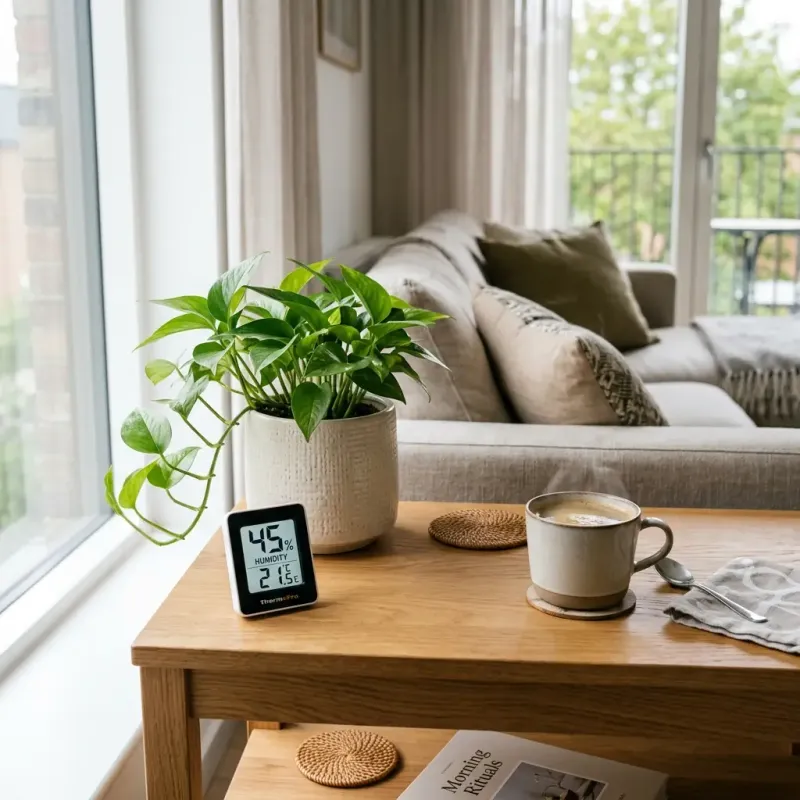 Normal Room Humidity: Ideal Indoor Humidity Levels by Season and RoomLearn ideal room humidity levels by season and room, warning signs of high or low humidity, how to measure wit...
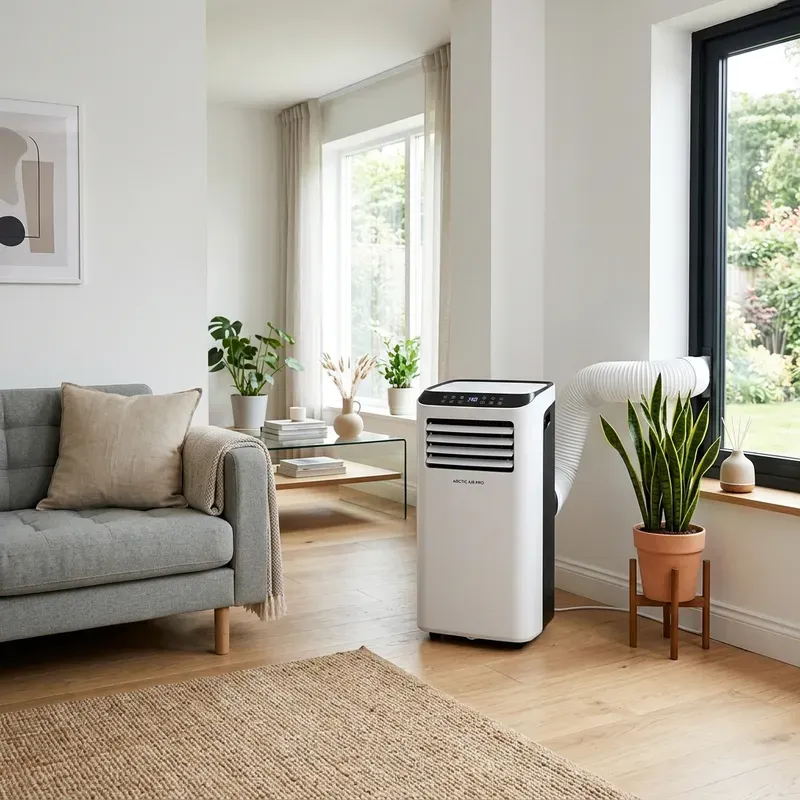 Why Is My Portable AC Not Cooling the Room?Troubleshoot a portable AC that is not cooling, including hose setup, BTU sizing, window kit gaps, filters, si...