Cooling & Airflow
Why Is One Room in My House So Hot? A Practical Diagnosis Checklist
Use this checklist to diagnose one hot room, hot bedrooms at night, poor airflow, sun exposure, closed doors, and AC sizing issues.
Key takeaways
- First decide whether the room gains too much heat, receives too little cool air, or cannot return air well.
- Hot bedrooms at night often store afternoon heat in walls, floors, and furnishings.
- Closing the door can make a room hotter if there is no return-air path.
- A bigger AC is not always the fix; shade, airflow, duct balance, and venting may matter more.
Hot room diagnosis table
| Symptom | Likely cause | First check | Low-cost fix | When to call a pro |
|---|---|---|---|---|
| Room is hottest in afternoon | Sun exposure or roof heat | Which windows get direct sun | Close curtains before sun hits | Attic insulation or duct issue suspected |
| Room cools with door open | Poor return-air path | Compare door open vs closed | Use door gap or transfer path advice | Return grille or duct changes needed |
| Weak air from vent | Blocked vent, dirty filter, duct issue | Tissue test at supply register | Clear vent and replace filter | Airflow stays weak |
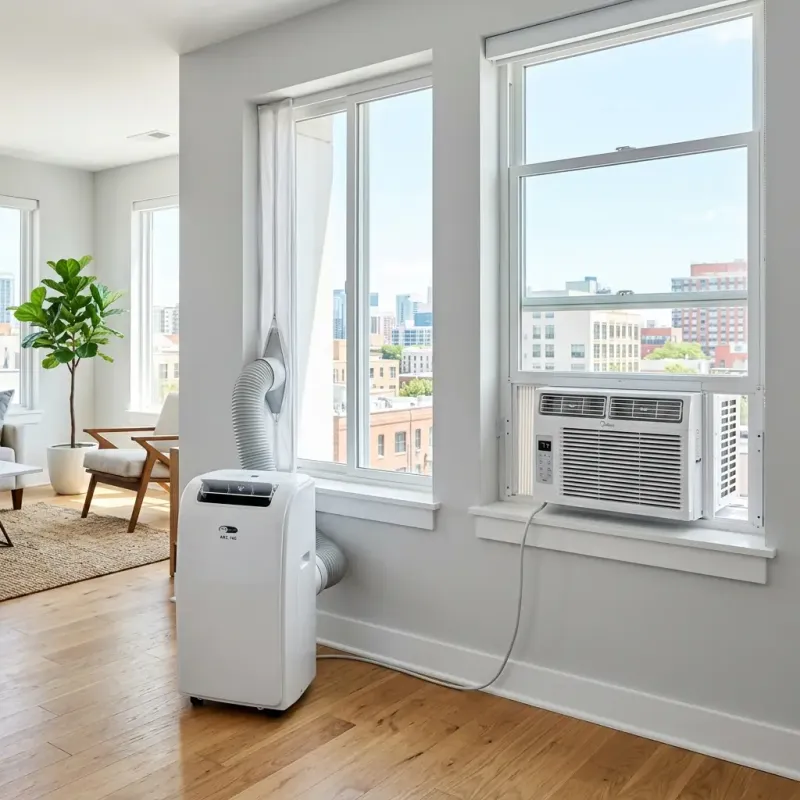
| Portable AC runs but room stays hot | Bad venting, too much heat gain, wrong size | Hose, window seal, BTU, sunlight | Improve vent seal and shade | Electrical or equipment problem |
Airflow checks
Start at the supply vent. During the same cooling cycle, hold the same tissue the same distance from the hot-room register and a comparable register. Consistently weaker movement is a screening clue for an obstruction, damper, filter, or duct-distribution issue; tissue does not measure airflow or prove the cause.
Move furniture, curtains, and storage away from supply registers and return paths according to equipment guidance. Run another complete cooling cycle with doors in the same position and record whether the comparison changes. Persistent weak flow needs measured HVAC assessment rather than further guessing.
Sun and heat gain
West- and south-facing rooms often overheat in late afternoon even when the thermostat is satisfied elsewhere. Close curtains or blinds before sun hits the glass, not after the room is already hot.
Reflective window film or thermal curtains can reduce heat gain without replacing windows. See thermal curtains vs window film for tradeoffs.
Hot bedrooms at night
Bedrooms can feel hottest after sunset because walls, floors, and furniture stored afternoon heat. If the room was sunny all day, give it time to cool with airflow before judging the AC.
A fan, open door during cooling cycles, and lighter bedding often help more than lowering the thermostat for the whole house.
Renter-friendly fixes
- Tension rods and thermal curtains.
- Removable window film.
- Fans and vent deflectors.
- Written maintenance requests for weak airflow or broken exhaust fans.
Repeatable comparison tests
- Place one thermometer at the same height and away from sun, windows, vents, and electronics; let it stabilize in the hot room and a comfortable room.
- Repeat the readings at the same times on more than one day, noting outdoor conditions and direct sun.
- Compare tissue movement at similar registers during the same cooling cycle.
- On separate cycles, compare the room with the door open and closed while keeping other conditions unchanged.
- Note when each window receives direct sun and whether shading was already closed.
- For a portable AC, inspect the manufacturer-approved hose route, window-kit seal, filter, and condensate handling.
These observations isolate patterns but do not measure duct airflow, refrigerant charge, insulation level, or equipment capacity. A technician is needed for those determinations.
Fixes by cause
Sun heat: shade glass early, add curtains, reduce stored heat in dark furniture.
Weak supply air: clear vents, replace filter, ask about duct balance.
Poor return path: keep door open during cycles or discuss transfer grille options with landlord.
Wrong AC size or venting: compare BTU to room size and inspect hose routing for portable units.
FAQ
Why is one room hot when the rest of the house is cool?
Usually sun exposure, weak airflow, poor return path, or equipment that cannot serve that branch well.
Can closing vents in other rooms help?
Small adjustments sometimes help, but closing many vents can raise duct pressure and hurt performance.
When should I call HVAC?
If airflow stays weak, the room never improves after basic checks, or you smell burning or see water damage.
Sun vs equipment
If the room is hottest on sunny afternoons with AC off, prioritize shading. If it is hot with weak airflow at the vent, prioritize distribution. Do not buy BTUs until you know which story you are in.
More detail you can use today
Separate sun problems from airflow problems from AC vent leaks. Buy capacity last.
If a product fights your windows, doors, or lease rules, remove it. A stuck sash or scraped fire door is a worse outcome than a small leftover draft. Prefer reversible kits and keep packaging until you know the fix earned its keep.
When comfort finally stabilizes, stop adding layers. Extra gadgets after the problem is solved mostly add clutter and energy use.
Share what worked with your household so people do not reopen tilted windows or block the radiator you just cleared. Consistency keeps the win.
 Top Floor Apartment Hot?
 Summer Cooling Without AC
 Portable vs Window AC
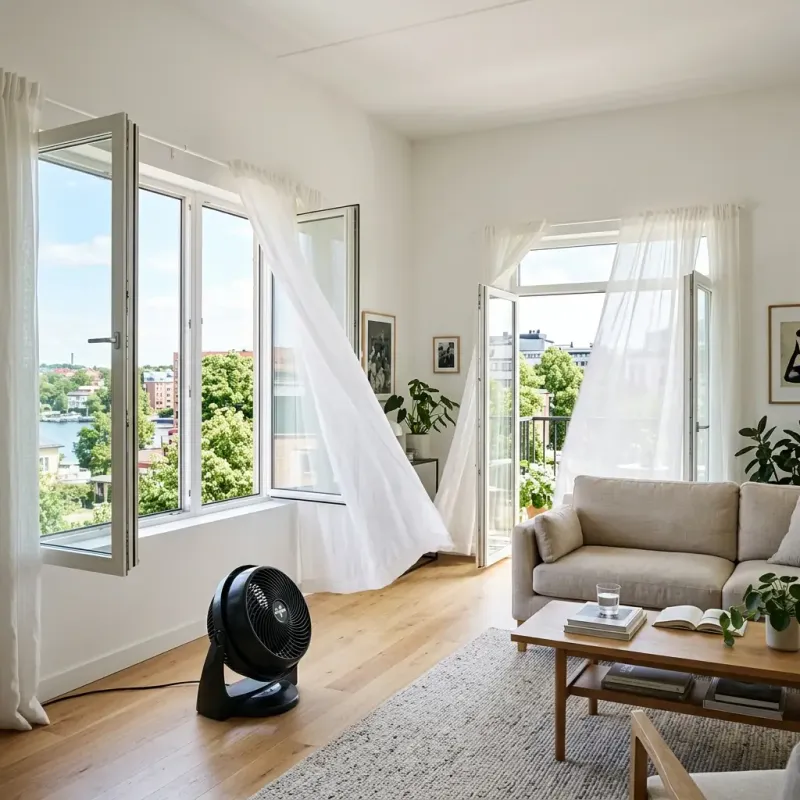 Improve Bedroom Airflow