How to Cool an Apartment Without AC: Shade, Airflow, Night Flush
Renter-friendly ways to cool an apartment without AC, reduce heat gain, improve airflow, and make hot rooms more comfortable.
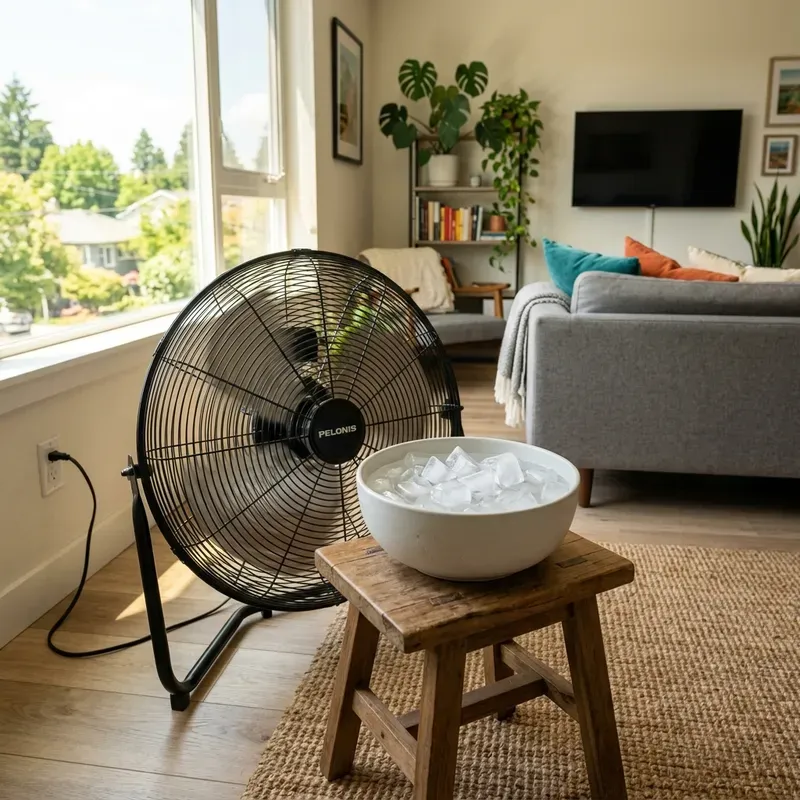
Key takeaways
- Block heat early; do not wait until the room is already hot.
- Fans help most when they move air in a planned direction.
- Open windows only when outdoor air is cooler or drier.
- High humidity makes a hot apartment feel worse.
Diagnosis table
| Problem | What it means | First check | Best fix |
|---|---|---|---|
| Room heats after noon | Solar gain through windows | Note which windows get sun | Close shades before direct sun |
| Hot at night | Stored heat in walls and ceiling | Compare indoor and outdoor temp | Exhaust warm air when outside cools |
| Still air | No circulation path | Open door and test fan direction | Move air toward hallway or window |
| Sticky heat | Humidity is high | Check hygrometer | Use exhaust or dehumidifier |
Block sun before the room heats up
Curtains work best before sunlight hits the glass. Close shades in the morning for east windows and before afternoon for west or south windows.
If allowed, use removable reflective film or light-colored liners. The goal is to reduce heat gain, not just hide glare.
Use fans with a direction
A fan pointed at you improves comfort, but it does not remove heat from the apartment. When outdoor air is cooler, place a fan near a window blowing outward to exhaust warm indoor air.
If you have two windows, create a path: one opening for incoming cooler air and one fan pushing warm air out.
Cool the apartment at night
If nights are cooler, open windows after sunset and use fans to flush heat. Close windows again when outdoor temperature starts rising.
Top-floor apartments may release stored heat for hours. Night cooling helps, but it may need to be repeated for several evenings during a heat wave.
Reduce indoor heat sources
Avoid oven use during the hottest part of the day, switch off unused electronics, use efficient bulbs, and run bathroom or kitchen exhaust when cooking or showering.
Humidity control matters too. A hot room with high humidity feels heavier and more uncomfortable.
A no-AC daily cooling plan
The best no-AC apartment cooling routine changes during the day. Morning is for trapping cooler air inside. Afternoon is for blocking heat. Evening is for exhausting the heat the apartment stored.
- Morning: close sunny curtains before direct light reaches the glass.
- Midday: keep hot windows covered and avoid oven use if possible.
- Late afternoon: move fans toward the hottest side only if they can exhaust warm air.
- Evening: open safe windows when outdoor air is cooler than indoor air.
- Night: aim a fan across the bed or toward a window path, not directly into a blocked corner.
This routine is more effective than leaving every window open all day. During humid weather, it is often better to keep windows closed and focus on shade, fans on people, and moisture control.
Start with the room you actually use
Do not try to cool the entire apartment if you only need one bedroom comfortable enough to sleep. Close off the hottest unused room, shade the bedroom glass, and create a clear path from the coolest part of the apartment to the bed.
If the bedroom is hotter than the living room, test whether hallway air is cooler. A fan in the doorway can move cooler air into the bedroom better than a fan pointed at a closed window.
Renter-friendly fixes
- Use blackout or reflective curtains on sunny windows.
- Use box fans or pedestal fans without blocking exits.
- Ask about approved window film before applying it.
- Keep interior doors open when trying to move air through the apartment.
- Use a portable AC or window AC only if allowed and safely installed.
Mistakes to avoid
- Do not open windows all day if outdoor air is hotter.
- Do not point every fan randomly and expect the room to cool.
- Do not block smoke alarms, exits, or required ventilation.
- Do not ignore heat illness risk during extreme temperatures.
When to call a professional
Seek help or a safer cooling location if indoor temperatures become unsafe, especially for children, older adults, pets, or anyone with health conditions. Contact building management if windows do not open, ventilation is broken, or cooling equipment is not allowed during dangerous heat.
FAQ
Can you cool an apartment without AC?
You can reduce heat gain and improve comfort, but extreme heat may still require air conditioning or a safer cooling location.
Should fans point in or out?
Point a fan out when exhausting hot indoor air. Point inward only when outdoor air is cooler and cleaner.
Do blackout curtains help?
Yes, especially when closed before direct sun hits the window.
Why is my apartment hot at night?
Walls, ceilings, floors, and furniture release stored daytime heat after sunset.
Does humidity make a hot apartment worse?
Yes. High humidity makes sweat evaporate less effectively, so the room feels hotter.
Shade early
Blocking sun before it enters beats fighting heat after. Night flush only when outdoor air helps.
Related guides
 How to Improve Thermal Comfort if You RentNeed better thermal comfort in a rental? Learn which reversible fixes actually help with cold rooms, hot bedro...
 Room Too Hot? Avoid These Common Cooling MistakesWhen your room is too hot, the wrong moves make things worse. Learn why closing vents, misusing fans and buyin...
 Stuffy Room? Signs of Stagnant Air and Poor VentilationA stuffy room often points to poor air distribution, weak return airflow or pressure imbalance. Learn the warn...
 Smart Thermostats for Renters: Are They Worth It Without Permanent Changes?A renter-focused guide to smart thermostats, portable sensors, landlord permission, apartment thermostats, and...